
Why Undersea Internet Cables Matter to Global Security
Undersea fiber optic cables carry almost all international data traffic. Here is how they work, why they fail, and what resilient global connectivity requires.
The Internet Has a Physical Backbone
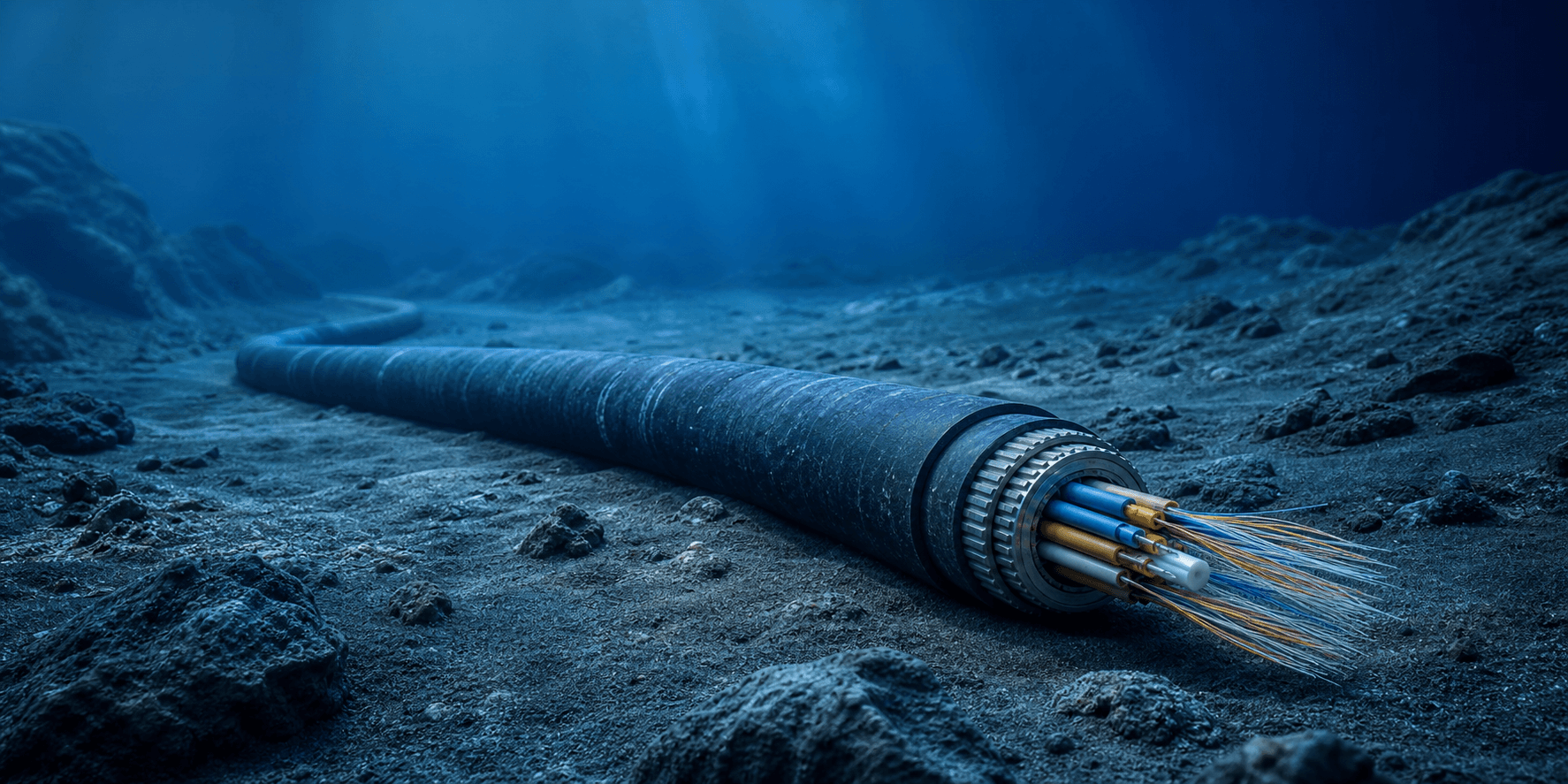
The cloud may sound weightless, but international digital life depends on cables laid across the ocean floor. Messages, video calls, financial transactions, cloud applications, and government communications move between continents through strands of glass protected by layers of insulation and armor.
The International Telecommunication Union says submarine cables carry more than 99% of data traffic worldwide. That makes them essential infrastructure for economies, public services, and everyday communication. A country can have modern mobile networks and data centers, yet still face serious disruption if its international cable connections are limited or concentrated in one place.
This dependence has pushed undersea cables from a specialist telecommunications issue into mainstream debates about national security, economic resilience, and diplomacy. The same concern is visible in wider efforts to protect critical infrastructure from digital threats. The difference is that submarine cables face both cyber risks and the physical hazards of the ocean.
How Submarine Cables Carry Global Traffic
A modern submarine cable contains optical fibers that transmit information as pulses of light. Repeaters placed along long routes amplify the signal so it can cross entire oceans. At each end, a cable landing station connects the undersea system to terrestrial fiber networks and data centers.
No single cable carries the whole internet. Operators route traffic across a network of systems owned by telecommunications companies, technology firms, investment groups, or consortia. When one route fails, network managers can often redirect traffic through another cable.
That redundancy explains why most individual faults do not cause a global outage. It does not guarantee that users will notice nothing. Rerouted traffic can produce slower connections or congestion, especially where a region depends on only a few cables or landing points.
Most Cable Faults Are Accidental
Public discussion often focuses on sabotage, but routine hazards cause most damage. According to the ITU, fishing and anchoring account for more than 80% of cable faults. Earthquakes, underwater landslides, strong currents, equipment failures, and other natural or technical events cause many of the remainder.
Risk also varies by location. In deep water, cables can rest directly on the seabed. Near coasts, where ships, fishing activity, and construction create greater exposure, operators may bury cables or add heavier protective armor. Careful route planning helps avoid unstable terrain, busy anchorages, and other known hazards.
The network experiences faults regularly. The ITU reported more than 170 repairs worldwide in 2025, close to four per week on average. That number is less alarming than it first appears because repairs and traffic rerouting are normal parts of operating a global system. The real concern is whether several faults affect the same region, whether alternative routes have enough capacity, and how quickly repair work can begin.
Why Repairs Take Time
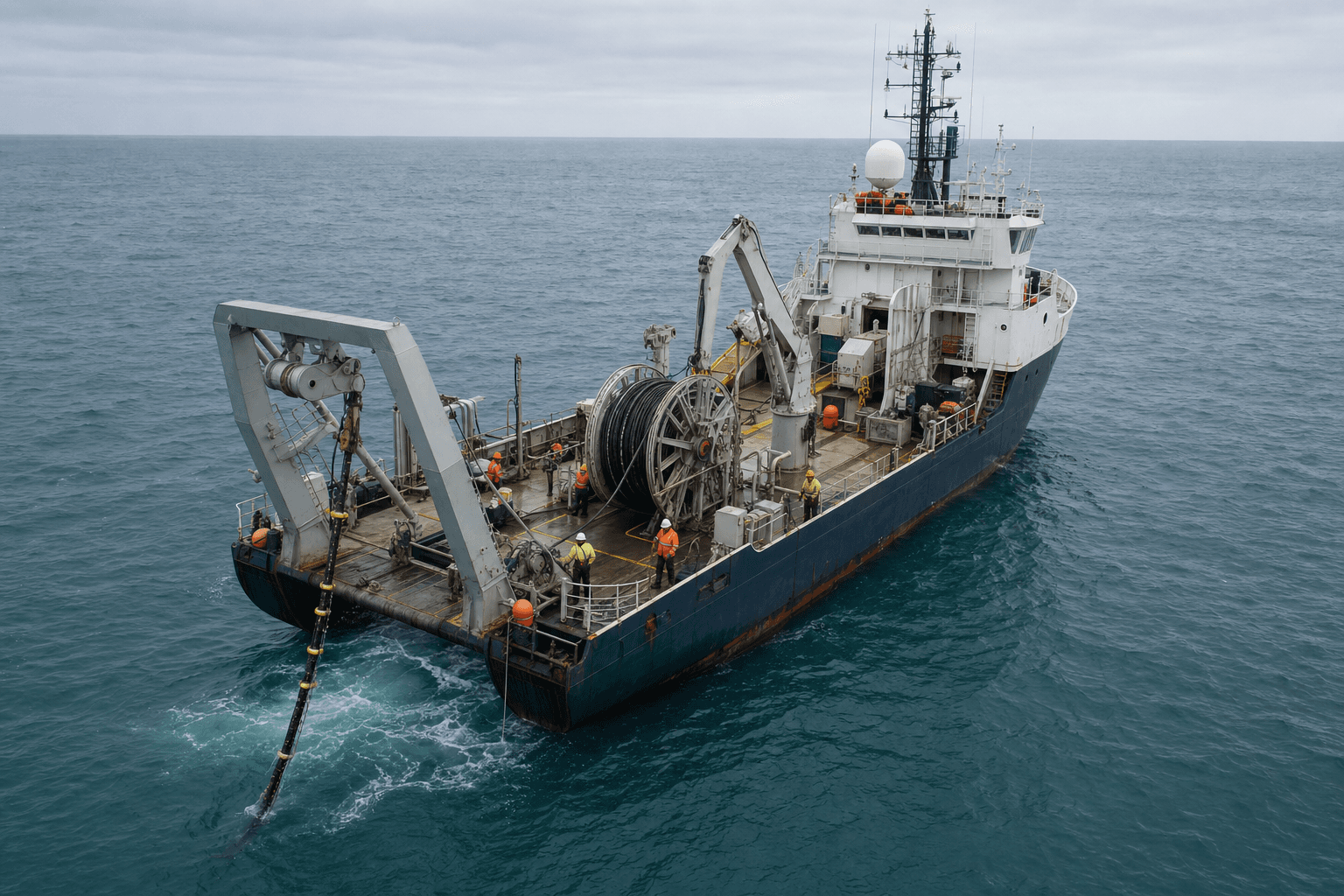
Repairing a submarine cable is a specialized marine operation. First, engineers use network measurements to estimate where the fault occurred. A cable ship then travels to the location, retrieves the damaged section, splices in a replacement, tests the connection, and returns the cable to the seabed.
Weather, water depth, fault location, ship availability, and permits can all affect the schedule. A repair vessel may need authorization to enter territorial waters or work across several jurisdictions. Spare cable and compatible equipment must also be available.
The repair itself is only one part of resilience. Governments and operators need arrangements in place before a fault occurs. These include clear points of contact, predictable permit processes, access to repair ships, spare equipment, and procedures for sharing operational information without exposing sensitive details.
Concentration Creates the Greatest Risk
A country connected by several cables can still be vulnerable if they follow the same route or land at the same coastal facility. One anchor incident, earthquake, or power failure could then affect multiple connections at once.
Geographic diversity matters at three levels:
- Cable routes: Connections should approach a country through different marine corridors where possible.
- Landing points: Separate coastal stations reduce dependence on one facility or local power supply.
- Terrestrial links: Each landing station needs diverse inland connections so traffic is not forced through a single fiber route.
Small island states and remote regions face an especially difficult challenge. Building an additional cable is expensive, while their smaller markets may offer limited commercial returns. Public funding, regional partnerships, and shared infrastructure can therefore become essential. Cable resilience is not only an engineering problem. It is also a question of development and equal access to the digital economy.
Landing Stations Need Physical and Digital Protection
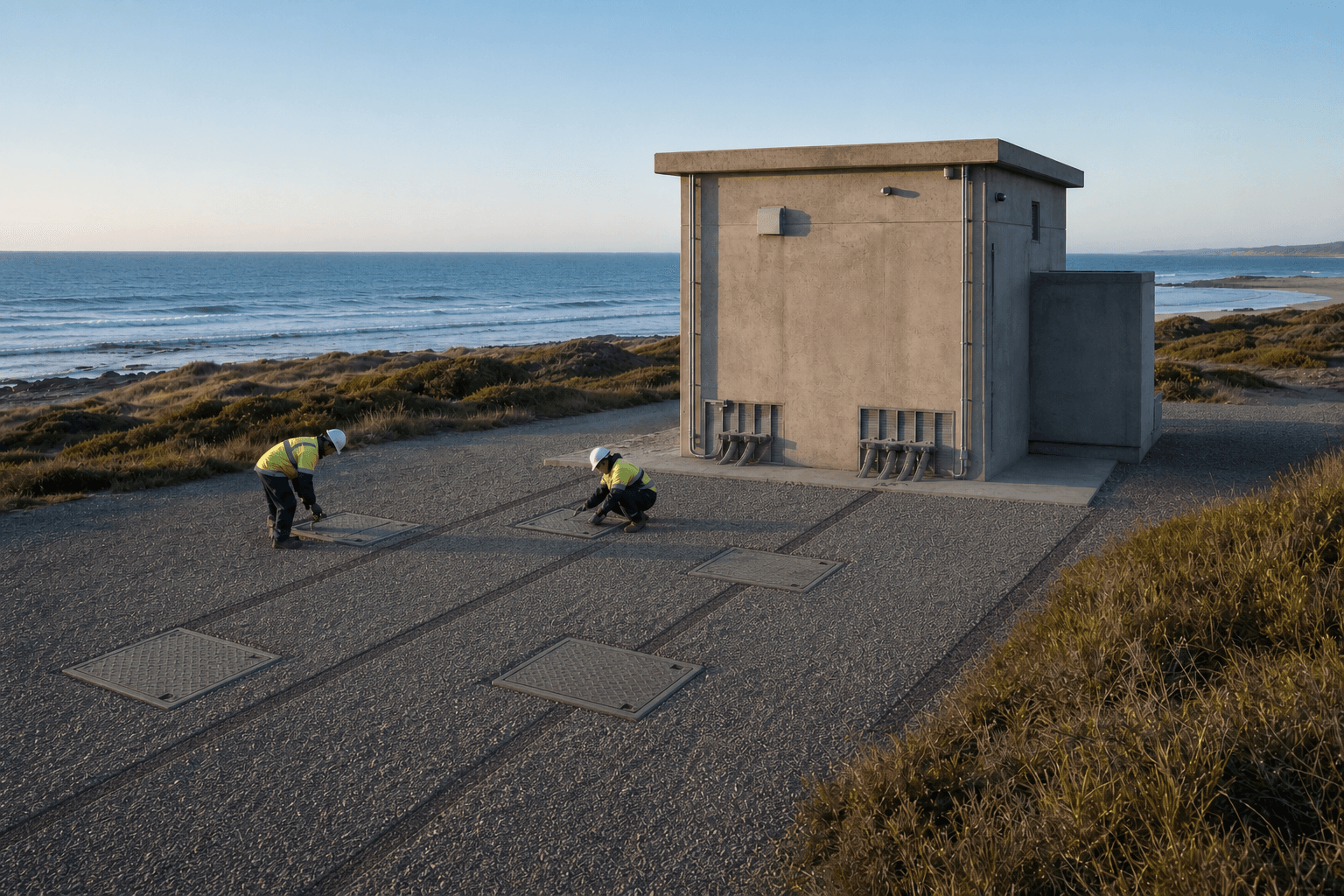
Landing stations are where undersea infrastructure becomes accessible on land. Their security involves controlled access, backup power, fire protection, network monitoring, and diverse onward connections. Operators must also protect management systems and suppliers from cyber intrusion.
Complete secrecy is not realistic. Marine safety requires cable routes to be known well enough for ships and fishing crews to avoid them. At the same time, publishing unnecessary operational detail can create security risks. Authorities must balance navigational awareness with protection of sensitive information.
This is one reason cable policy requires cooperation between governments and private companies. Much of the infrastructure is privately owned, but disruption can affect public services, national economies, and international relations. Clear responsibilities are needed before an incident, not negotiated during one.
Security Is Broader Than Sabotage
Intentional damage remains a serious concern, particularly during geopolitical tension. Attribution is difficult underwater, however, and suspicion should not replace evidence. Investigators need vessel data, physical inspection, network records, and cooperation across borders before drawing conclusions.
Governments also need to avoid planning only for hostile action. A resilience program designed for accidental damage, severe weather, and equipment failure will also improve recovery after a deliberate incident. Diverse routes, faster repairs, backup power, and practiced response procedures are useful regardless of the cause.
Cable policy is increasingly connected to broader economic competition. Disputes that affect global trade and supply chains can also influence access to ships, equipment, finance, and strategic routes. At the same time, cables cross jurisdictions and connect countries that may disagree on other issues. Keeping them reliable requires the kind of regional cooperation built through diplomacy that can survive political change.
Can Satellites Replace Undersea Cables?
Satellites are valuable for remote communities, emergency communications, ships, aircraft, and backup connectivity. They can restore essential access when terrestrial or submarine systems fail. They are not a complete replacement for the immense capacity of fiber optic cables that link major population and data centers.
The strongest strategy treats satellite and cable networks as complementary. A hospital, bank, or government agency may not be able to run every service over emergency satellite capacity, but it may preserve critical communications while cable traffic is restored. The goal is not to choose one technology. It is to avoid a single point of failure.
What Resilient Connectivity Looks Like
Countries and operators can strengthen resilience through practical measures:
- Map dependencies and identify routes, landing stations, power systems, and inland links that share the same risk.
- Build geographic diversity instead of adding nominal capacity along an existing corridor.
- Streamline repair permits while preserving environmental and maritime safeguards.
- Maintain access to repair vessels, trained crews, spare cable, and compatible equipment.
- Share incident information through trusted channels and use consistent reporting standards.
- Run exercises that test traffic rerouting, public communication, and coordination between agencies and operators.
- Provide backup connectivity for essential services, including realistic priorities for limited capacity.
These steps are less visible than a new cable announcement, but they determine how well a network performs during disruption.
A Hidden System With Visible Consequences
Undersea cables work so reliably that most people never think about them. That invisibility is a sign of engineering success, not evidence that the system can be ignored.
As economies become more dependent on cloud services and cross-border data, cable resilience will shape financial stability, emergency response, public trust, and strategic autonomy. The central lesson is straightforward: connectivity depends not only on having more cables, but on building diverse routes, protecting landing points, preparing repairs, and maintaining international cooperation before a crisis begins.