
How Shipping Chokepoints Shape Global Trade
Narrow straits and canals keep maritime trade efficient, but disruption can spread quickly. Here is how chokepoints work and how supply chains can become more resilient.
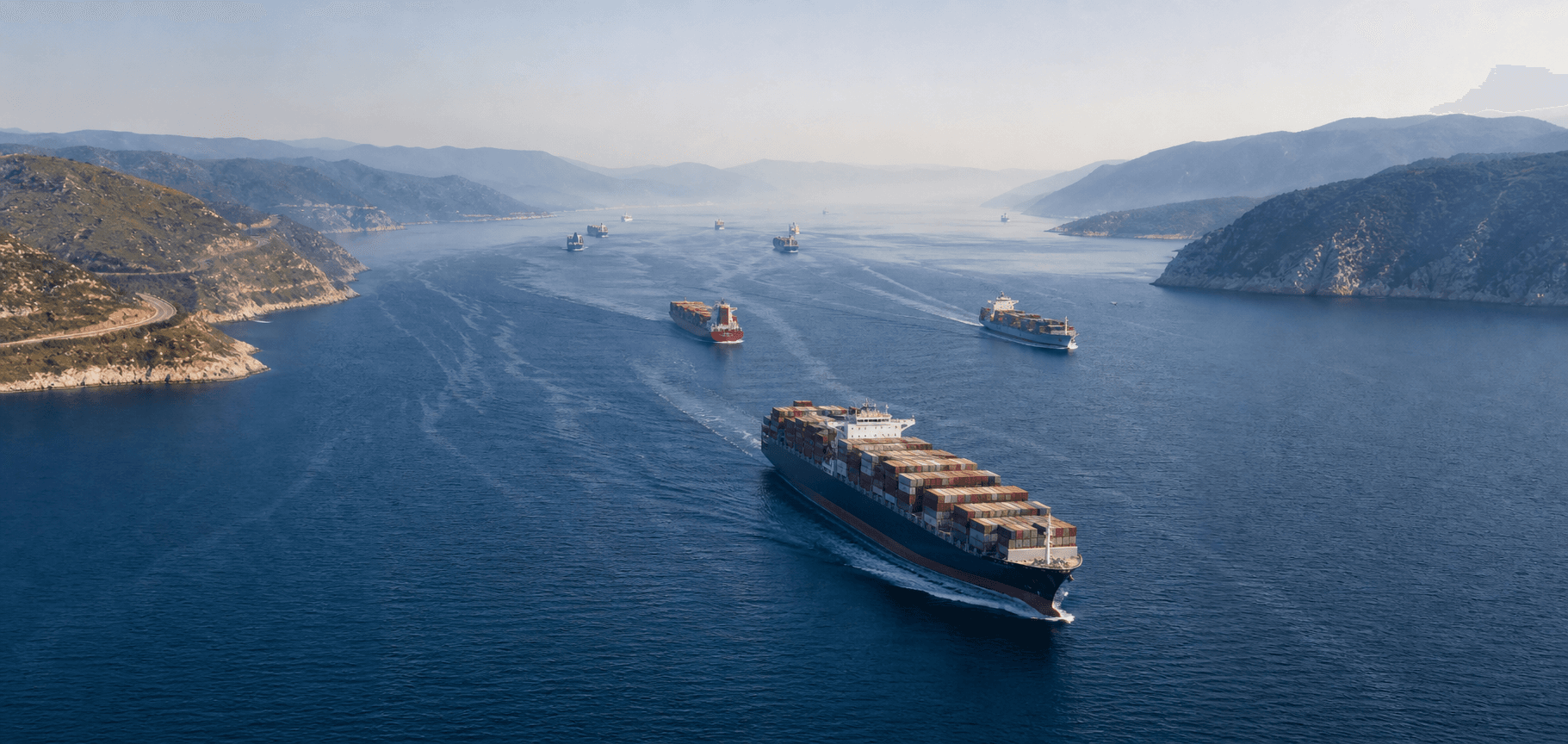
Why Narrow Passages Have Global Reach
Most international trade in physical goods moves by sea. Ships make that trade economical by carrying large quantities of energy, food, raw materials, machinery, and consumer products over long distances. Yet many voyages converge on a small number of narrow waterways.
These passages are known as maritime chokepoints. Some are natural straits between land masses. Others are canals built to shorten routes between oceans. They make global shipping faster and cheaper, but they also concentrate traffic in places where a local disruption can create consequences far beyond the coast.
That tension is the central feature of a chokepoint. The same route that creates efficiency in normal conditions can become a source of delay when capacity falls. Understanding the difference between inconvenience and genuine supply risk helps explain why a blocked channel, severe weather, conflict, or maintenance problem can move freight rates and delivery schedules around the world.
What Counts as a Maritime Chokepoint?
A chokepoint is a narrow, heavily used passage connecting larger bodies of water or major trading regions. Its importance depends on more than width. The critical question is how much traffic relies on it and whether practical alternatives exist.
The Strait of Malacca connects the Indian and Pacific Oceans and sits on important routes between Asian manufacturing centers, energy producers, and consumer markets. The Strait of Hormuz provides the principal maritime exit from the Persian Gulf. The Bab el-Mandeb links the Gulf of Aden with the Red Sea, while the Suez Canal connects the Red Sea with the Mediterranean.
Farther west, the Panama Canal allows vessels to cross between the Atlantic and Pacific without traveling around South America. The Turkish Straits connect the Black Sea with the Mediterranean system. Each passage serves a different mix of cargoes, vessel types, and trading relationships.
Not every chokepoint has the same level of exposure. Some ships can take another route, although at greater cost. Other cargoes have few realistic maritime alternatives because production, pipelines, ports, or buyers are concentrated on one side of a passage.
Why Shipping Networks Depend on Them
Global shipping is built around predictable distances and schedules. A shorter route uses less fuel, keeps a ship and crew occupied for fewer days, and allows the same vessel to complete more voyages over a year. Ports, warehouses, rail services, truck capacity, and factory inventories are then planned around expected arrival windows.
Canals deliver especially clear savings by replacing long voyages around continents. Natural straits provide access between seas that would otherwise be separated by land. Over time, shipping services, refineries, distribution centers, and industrial supply chains develop around these routes.
This dependence is not automatically a mistake. Using an efficient route is rational when it is open and reliable. The risk appears when businesses treat an efficient route as if it were guaranteed. Similar concentration concerns apply to other forms of cross-border infrastructure, including undersea internet cables. Physical systems can have redundancy on paper while still sharing the same geographic hazard.
Canals Trade Distance for Controlled Capacity
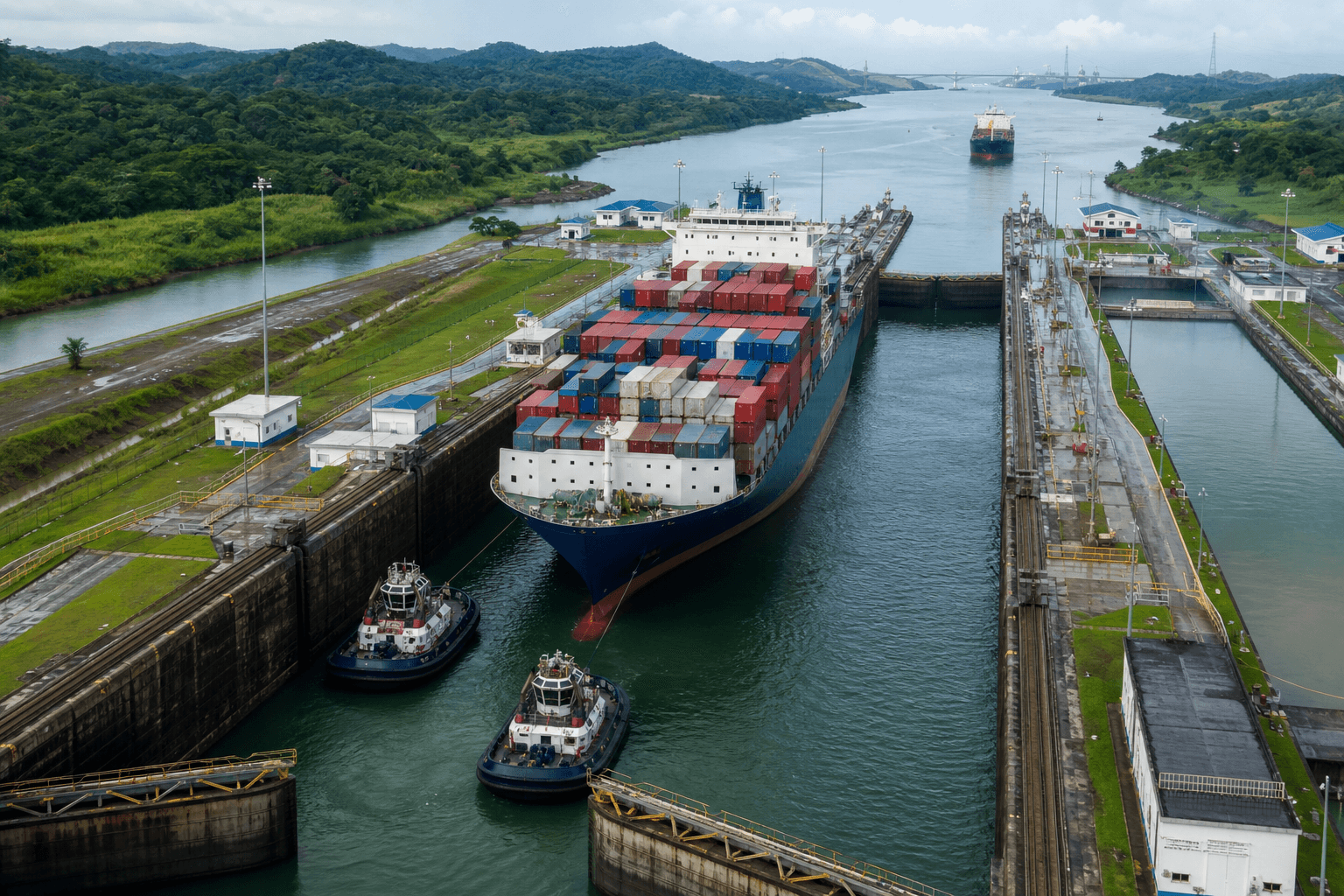
A natural strait generally allows vessels to pass through open water under navigation rules. A canal is a managed system with defined dimensions, transit slots, maintenance needs, and operating limits.
Locks may raise and lower ships between different water levels. Vessel length, width, and draft determine which ships can enter. Canal authorities schedule traffic, maintain gates and channels, manage pilots and tugboats, and respond to weather or equipment problems.
Water can also be an operational constraint. The Panama Canal's lock system depends on freshwater stored in its watershed. During extended dry conditions, the authority can restrict vessel draft or daily transits to protect water supplies and keep the route operating. The result is not necessarily closure. Reduced capacity alone can create queues, change which vessels receive slots, or make another route more attractive.
This is why canal resilience includes more than repairing concrete and machinery. It also involves watershed management, forecasting, maintenance planning, safe navigation, and clear communication with shipping companies.
How a Local Delay Becomes a Network Problem
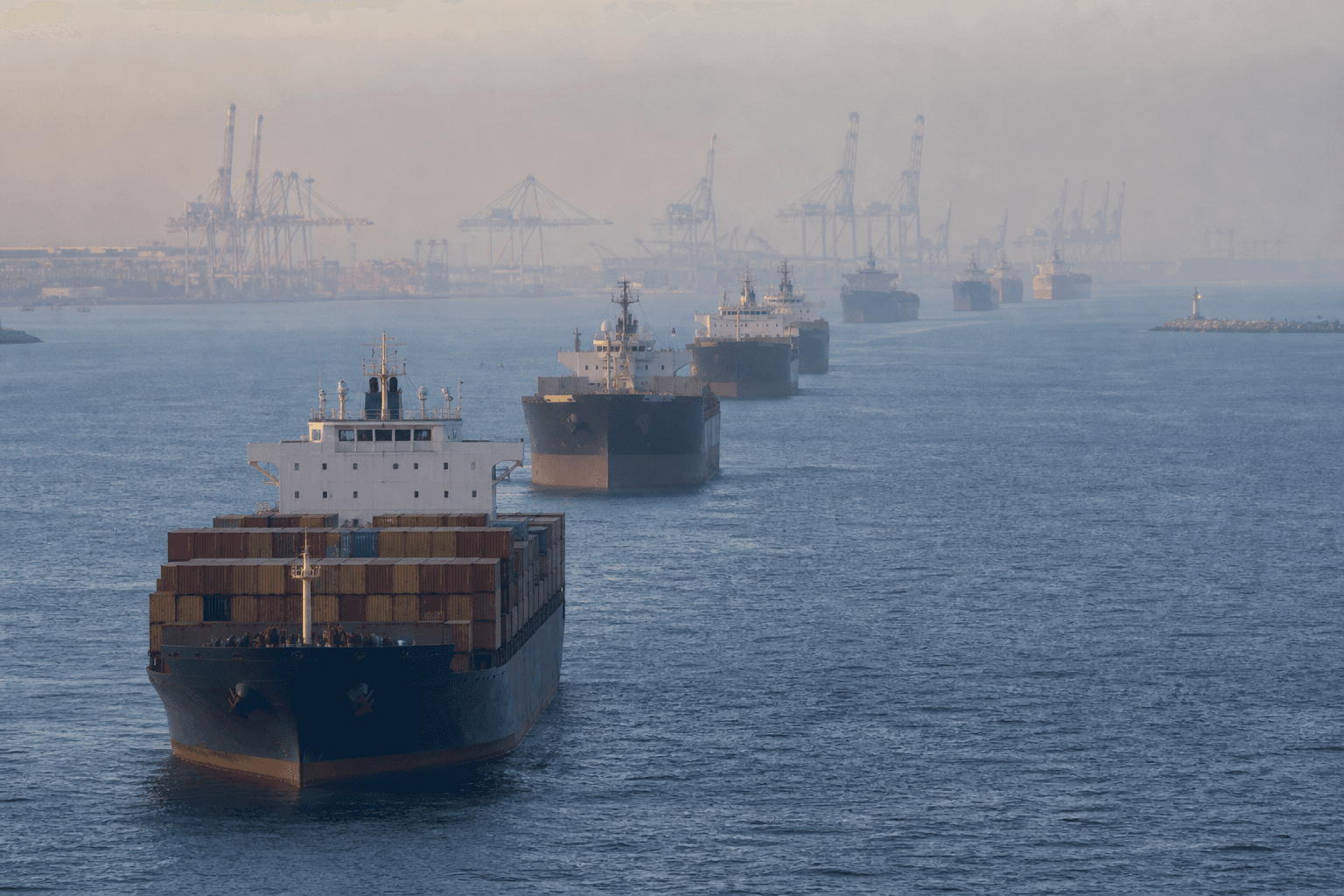
When a chokepoint loses capacity, the first visible effect is often a queue. The wider impact develops through several connected mechanisms:
- Longer voyages: Ships that reroute must travel farther, consuming more fuel and crew time.
- Less available capacity: A vessel spending extra days at sea cannot begin its next scheduled voyage on time.
- Unreliable arrivals: Ports may face quiet periods followed by several delayed ships arriving together.
- Equipment imbalance: Containers, chassis, and warehouse space can accumulate in the wrong locations.
- Inventory pressure: Factories may wait for components while retailers receive seasonal goods later than planned.
- Higher risk costs: Insurance, security, fuel, and charter costs may rise when a route becomes less predictable.
These effects can continue after traffic begins moving normally. Ships, crews, ports, and containers all need time to return to their planned rotations. A reopened passage therefore ends the immediate obstruction, not every downstream delay.
The price impact also varies. A short disruption may be absorbed through inventory or spare capacity. A longer event can become more serious when it affects several routes, coincides with peak demand, or involves a commodity with limited substitutes. Wider trade tensions and tariffs can add another layer by narrowing the supplier options available to businesses.
Different Cargoes Face Different Risks
It is misleading to discuss shipping as if every vessel carries the same economic problem.
Container ships carry finished goods, machinery, and components across scheduled service networks. Delays can disrupt production even when the affected cargo is small in weight but essential to a factory.
Tankers move crude oil, refined products, chemicals, and liquefied gases. Energy routes may be especially sensitive when a chokepoint connects concentrated production areas with major markets. Some flows can use pipelines or alternative ports, while others cannot shift quickly.
Bulk carriers transport grain, coal, iron ore, and other high-volume commodities. These cargoes may tolerate a longer voyage better than perishable products, but extra distance still raises transport costs. Grain delays can also matter for countries that depend heavily on imports or have limited storage.
Risk must therefore be assessed by product, origin, destination, season, vessel type, and available alternative. A company that knows only that it uses "ocean freight" does not yet understand its exposure.
Rerouting Solves One Problem and Creates Others
Many chokepoints can be bypassed. A ship avoiding the Suez route can travel around the Cape of Good Hope. A vessel unable to use the Panama Canal may take a much longer route or transfer cargo across land. These options keep trade moving, but they are not free replacements.
Extra distance increases fuel use and voyage time. The alternative route may encounter different weather, port constraints, or security risks. Cargo owners may need new bookings, while ports on the revised path face unfamiliar demand. A diversion that works for one ship can become harder when many operators make the same decision.
Rerouting can also change emissions. Longer voyages generally require more fuel, although the final impact depends on vessel speed, loading, fuel type, and operating conditions. Resilience planning must account for environmental costs as well as delivery time.
Building Supply Chains That Can Absorb Disruption
No business can remove every maritime risk, and duplicating every supplier or route would be expensive. The goal is to identify where concentration could cause unacceptable harm and build proportionate alternatives.
- Map the full route for critical goods, including origin ports, transshipment hubs, chokepoints, destination ports, and inland connections.
- Identify products that would stop production or essential services if delayed, rather than applying the same buffer to every item.
- Qualify alternative suppliers, ports, carriers, or transport modes before a disruption occurs.
- Use realistic lead times and test what happens when a voyage takes days or weeks longer than planned.
- Improve shipment visibility so teams can respond to a delay before inventory is exhausted.
- Review contracts for responsibility, insurance, rerouting authority, and communication during disruption.
- Exercise response plans with logistics providers and key customers instead of relying on an untested document.
Governments have a different but related role. They can support reliable ports, navigation systems, customs processes, emergency coordination, and information sharing. Maritime infrastructure also needs protection from the cyber risks facing critical systems, because digital disruption can slow a port even when the channel itself remains open.
Efficiency Needs Prepared Alternatives
Shipping chokepoints are not flaws that can simply be designed out of world trade. Geography makes some passages uniquely valuable, and canals have reduced transport distances for generations. Their efficiency supports lower costs and wider access to global markets.
The danger comes from confusing efficient concentration with permanent certainty. Businesses need to know which routes their critical goods use, what alternatives cost, and how long a disruption can be tolerated. Governments and infrastructure operators need reliable maintenance, clear operating rules, environmental planning, and cross-border coordination.
Chokepoints make global trade possible at its current scale. Resilience comes from respecting their limits and preparing options before a narrow passage becomes a worldwide problem.