
How Early Warning Systems Turn Forecasts Into Action
A weather forecast becomes protection only when people can act on it. Explore the observations, local knowledge, communication, and preparation behind effective early warnings.
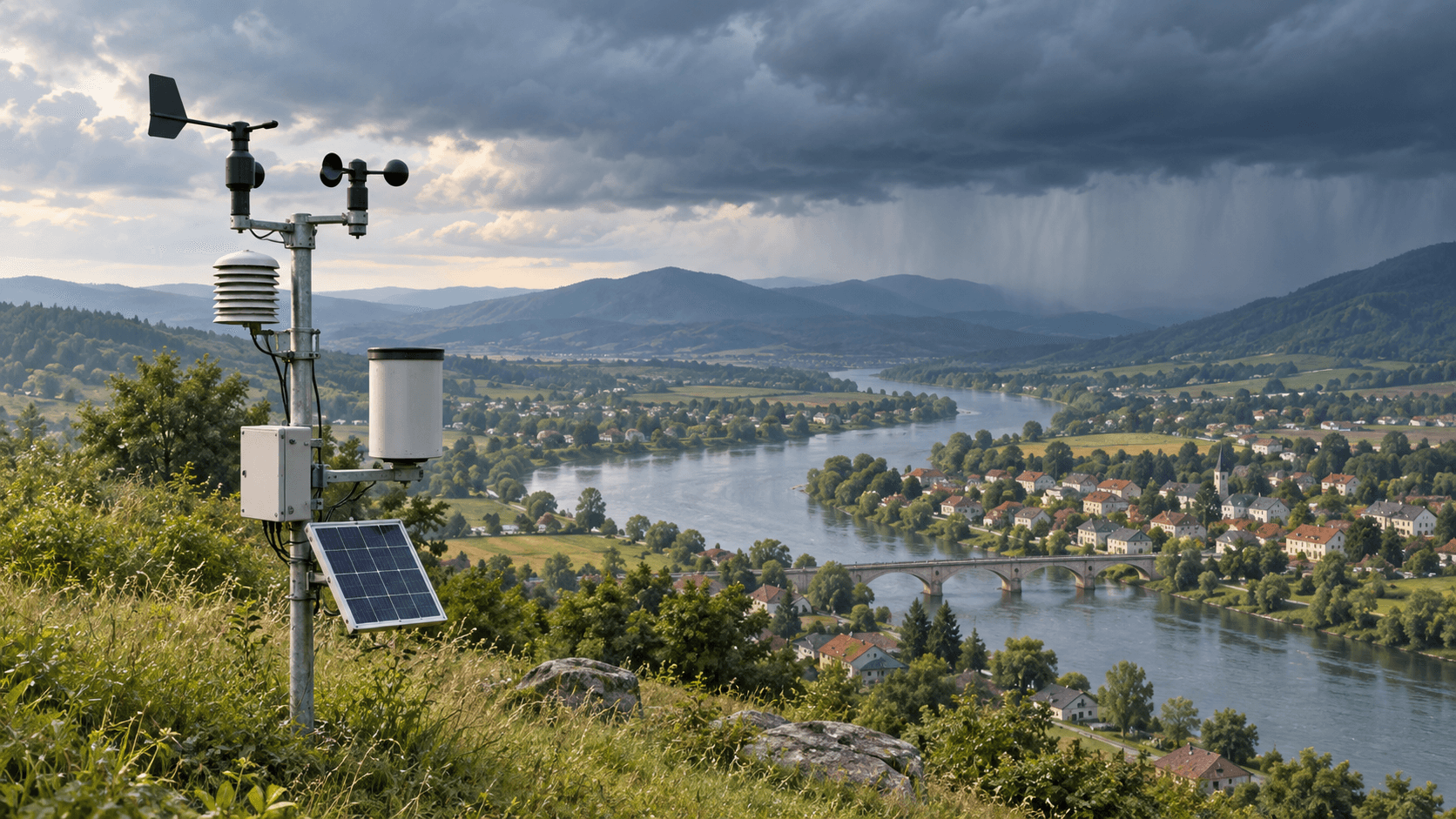
A Forecast Is the Beginning
A storm forecast can give a town time to prepare. Whether that time becomes protection depends on what happens next: someone must identify the neighborhoods at risk, issue an understandable warning, and make the recommended action possible.
An early warning system connects those tasks. It combines observations and forecasts with knowledge of local exposure, trusted communication, and practical response arrangements. A sophisticated weather model is valuable, but a warning cannot do its job if it reaches a household after the road has closed or tells residents to leave without providing a way to travel.
Understanding this chain helps explain why investment in early warnings includes weather stations and telecommunications, but also community organizations, transport, staff training, and routine maintenance. The central question is whether people can use the information while they still have time to reduce harm.
Four Parts Must Work Together
The international early warning framework describes four connected elements:
- Risk knowledge: Understanding which hazards threaten an area, who and what is exposed, and why some people face greater difficulty protecting themselves.
- Monitoring and forecasting: Observing conditions, detecting dangerous developments, and estimating their likely timing, location, and consequences.
- Warning communication: Delivering authoritative, timely information in forms that affected people can receive and understand.
- Preparedness and response: Having the plans, resources, and practiced capabilities to act when a warning arrives.
These elements depend on one another. A forecast needs local risk information to become useful advice. A response plan needs a trigger that somebody has authority to activate. Community feedback can reveal that an apparently successful broadcast missed an entire group of residents.
Responsibility also crosses institutions. Weather services, water agencies, local government, emergency managers, broadcasters, telecommunications providers, and community groups each hold part of the system. Their handovers need to work outside ordinary office hours.
Forecast the Consequences, Not Just the Weather
Rainfall totals and wind speeds describe a hazard. They do not fully describe its effects.
The same rainfall can produce different consequences depending on soil saturation, drainage, river levels, building locations, and the condition of roads. A storm that interrupts one community's commute could isolate another community's only route to medical care.
Impact-based forecasting brings those circumstances into the assessment. It connects the expected weather with possible effects on people, infrastructure, and essential services. That requires forecasters to work with the organizations that understand those systems.
Consider a hypothetical river town. An upstream gauge shows rising water, while the forecast indicates further rain. Local knowledge identifies a low bridge used by school buses and an isolated residential area beyond it. The useful decision is not simply whether the river will rise; it is when transport arrangements should change before access becomes unreliable.
This example also shows why maps need updating. New housing, a relocated clinic, or a changed bus route can alter the consequences of a familiar flood level.
Warnings Must Cross Borders Before Hazards Do
Weather and water do not stop at administrative boundaries. Observations from one country can improve forecasts elsewhere, while upstream rainfall and reservoir operations can affect downstream communities.
Countries therefore need arrangements for exchanging relevant observations, forecasts, and urgent notifications. Those arrangements are more useful when data arrives regularly, follows compatible definitions, and reaches a named operational contact. A file delivered too late may be accurate but no longer useful for a decision.
The practical issues resemble those involved in cooperation over shared rivers: partners need confidence in measurements, clear responsibilities, and procedures that continue working during disagreements.
Regional information still needs local interpretation. An alert covering a large river basin cannot identify every household requiring transport or every road likely to become impassable. International cooperation supplies a wider picture; local institutions connect it to specific action.
Getting a Message Through Is a Separate Job
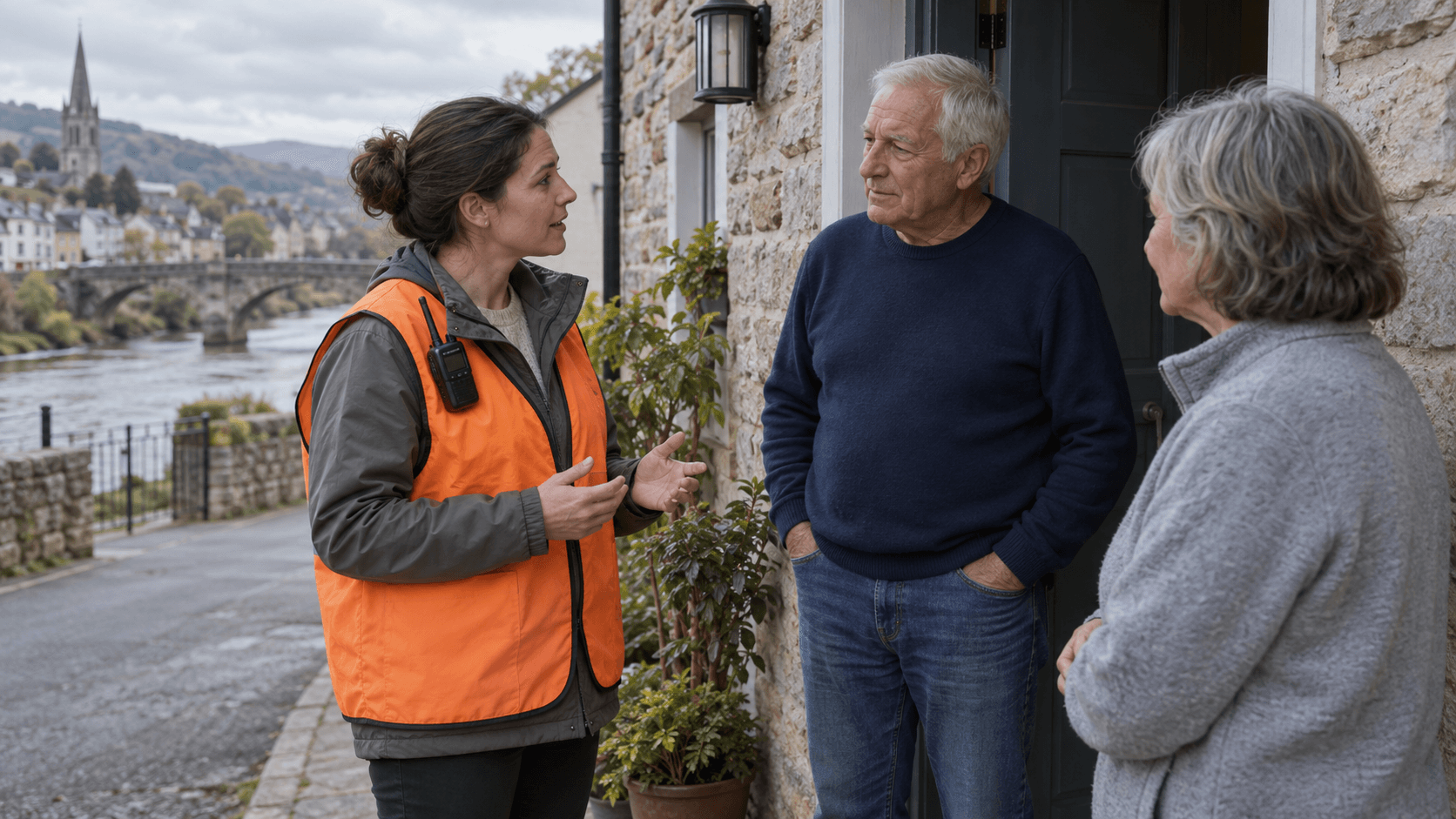
A warning should explain the hazard, affected area, expected timing, likely consequences, recommended action, issuing authority, and where to obtain updates. Technical detail should support those decisions rather than obscure them.
No single delivery channel reaches everyone. Mobile alerts, radio, television, sirens, public announcements, and community networks can complement one another. A siren may attract attention, but residents need to know its meaning and where to find instructions. A detailed online notice is of little help to someone without connectivity.
The Common Alerting Protocol provides a shared format for exchanging alert information between systems. It can help distribute a consistent message through different channels. It does not, by itself, guarantee coverage, understandable wording, or an effective response.
Language, hearing, vision, literacy, and familiarity with the area all matter. Visitors may not recognize local place names. People who work outdoors may not see a notification promptly. Testing messages with the people expected to use them can expose these gaps before an emergency.
People Need a Feasible Way to Act

Receiving a warning and being able to follow it are different things. A household may lack transport, need assistance moving a family member, or be unsure whether a shelter can accommodate essential needs. Those barriers require practical arrangements, not a louder message.
Preparedness means deciding in advance who opens a shelter, arranges accessible transport, checks isolated residents, and confirms that essential supplies are available. Exercises should test those tasks together, including what happens if a key person is unavailable.
Early action can also include preparing equipment, moving supplies, or changing service schedules before hazardous conditions arrive. The appropriate action depends on the forecast, local risks, available time, and the authority responsible for the decision.
These preparations complement the logistics involved in international disaster relief. Assistance after an event remains important, but warnings create an opportunity to reduce some needs before they become urgent.
Uncertainty Requires Decisions, Not Silence
Forecasts describe an evolving situation. The location, timing, and severity of a hazard may change as new observations arrive. Waiting for complete certainty can consume the time needed to prepare.
Response plans should distinguish actions by their cost, reversibility, and required lead time. Checking staff availability may be sensible at an earlier stage than closing a major transport route. More disruptive measures need an appropriate decision process and a clear explanation of the risk being managed.
Updates should say what has changed and what that means for previous advice. If a forecast threat does not materialize, reviewing the decision should examine the information available at the time, not only the outcome.
Equally, uncertainty should not become an excuse for vague instructions. People need to understand both what remains uncertain and what they are being asked to do now.
Keep the Warning System Working During Disruption
A storm can damage the same power and communications networks needed to deliver warnings. Equipment maintenance, backup power, alternative communication routes, and tested operating procedures therefore belong in the warning system's core budget.
Two channels may share a hidden dependency. A website and a mobile app can both become inaccessible when local connectivity fails. A backup radio is useful only if it is working, staff can operate it, and someone is listening.
The same concern appears in cross-border electricity grid resilience: a connection adds value, but reliable operation also requires coordination and preparation for failures. Warning systems need their own continuity plans rather than assuming other infrastructure will always remain available.
Judge the Whole Chain
An evaluation should follow a warning from the first observation to the eventual response. Useful questions include:
- Was the threatened area identified with enough time for the planned action?
- Who received and understood the warning, and who was missed?
- Did each organization know when it was responsible for acting?
- Were transport, shelters, staffing, and other promised resources available?
- Did updates reach the same people as the original message?
- What needs to change before the next event or exercise?
Counting alerts issued or sensors installed cannot answer all of these questions. Effective early warning is a continuing public service: observations, local knowledge, communication, and preparation must stay connected. Its value becomes visible when a useful forecast reaches people who understand it and have a workable way to respond.
Images are AI-generated conceptual illustrations, not photographs of a specific event or location.