
How International Disaster Relief Works After a Major Earthquake
A major earthquake can bring help from many countries within hours. Here is how national authorities, rescue teams, medical units, and aid agencies coordinate the response.
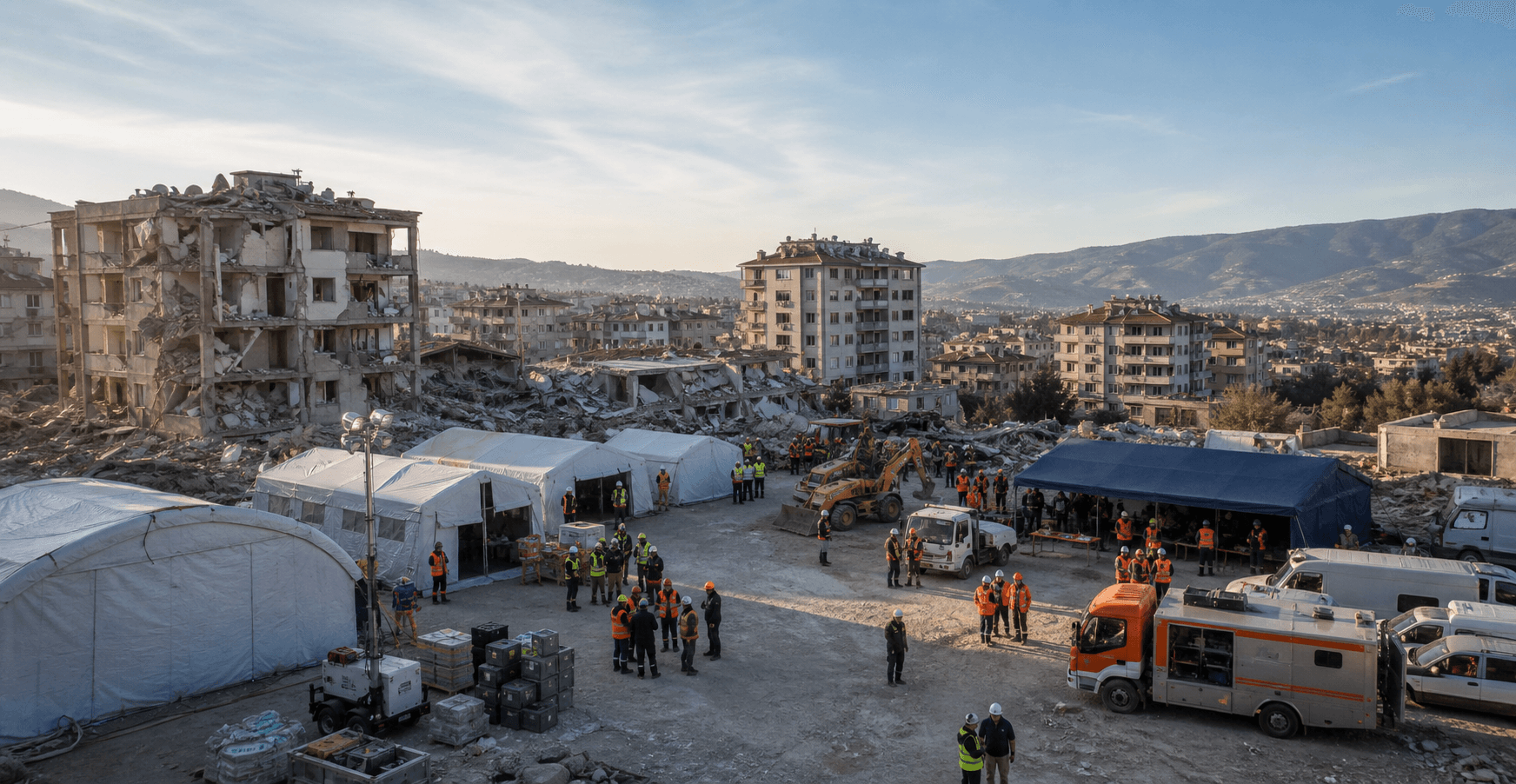
The First Response Is Local
When a major earthquake damages buildings, roads, hospitals, power systems, and communications at the same time, offers of international help can begin arriving within hours. Search-and-rescue teams, emergency medical units, aircraft, equipment, and relief supplies may come from governments, international organizations, and humanitarian groups.
The speed is valuable, but speed without coordination can create new problems. Airports can become congested. Teams may arrive with capabilities that are no longer needed. Supplies can collect at one warehouse while another area receives too little. Responders may unknowingly inspect the same neighborhood while a nearby community waits.
International disaster relief therefore does not replace the affected country's response. National and local authorities remain responsible for directing operations. International systems are designed to support that leadership, fill identified gaps, and help many organizations work from a shared picture of the emergency.
Authorities First Define What Help Is Needed
An earthquake's magnitude does not by itself explain the response required. Damage depends on depth, distance from populated areas, building quality, soil conditions, landslides, time of day, weather, and the capacity of local services. Two earthquakes with similar measurements can produce very different needs.
Local responders begin with rapid assessments. They identify collapsed structures, accessible routes, functioning hospitals, fires, utility failures, isolated communities, and immediate threats such as unstable slopes or damaged dams. National authorities then decide whether to request international assistance and which capabilities would be useful.
Specific requests are more effective than a general appeal for aid. A government may need heavy urban search-and-rescue teams, field surgical capacity, water treatment equipment, temporary shelters, airlift support, or engineers who can assess damaged infrastructure. It may already have strong capacity in other areas.
Diplomatic channels matter at this stage because foreign teams require permission, entry arrangements, and a clear relationship with national command. The same durable relationships that support international diplomacy during political crises can also make practical cooperation faster after a disaster.
Incoming Teams Enter a Common Coordination System
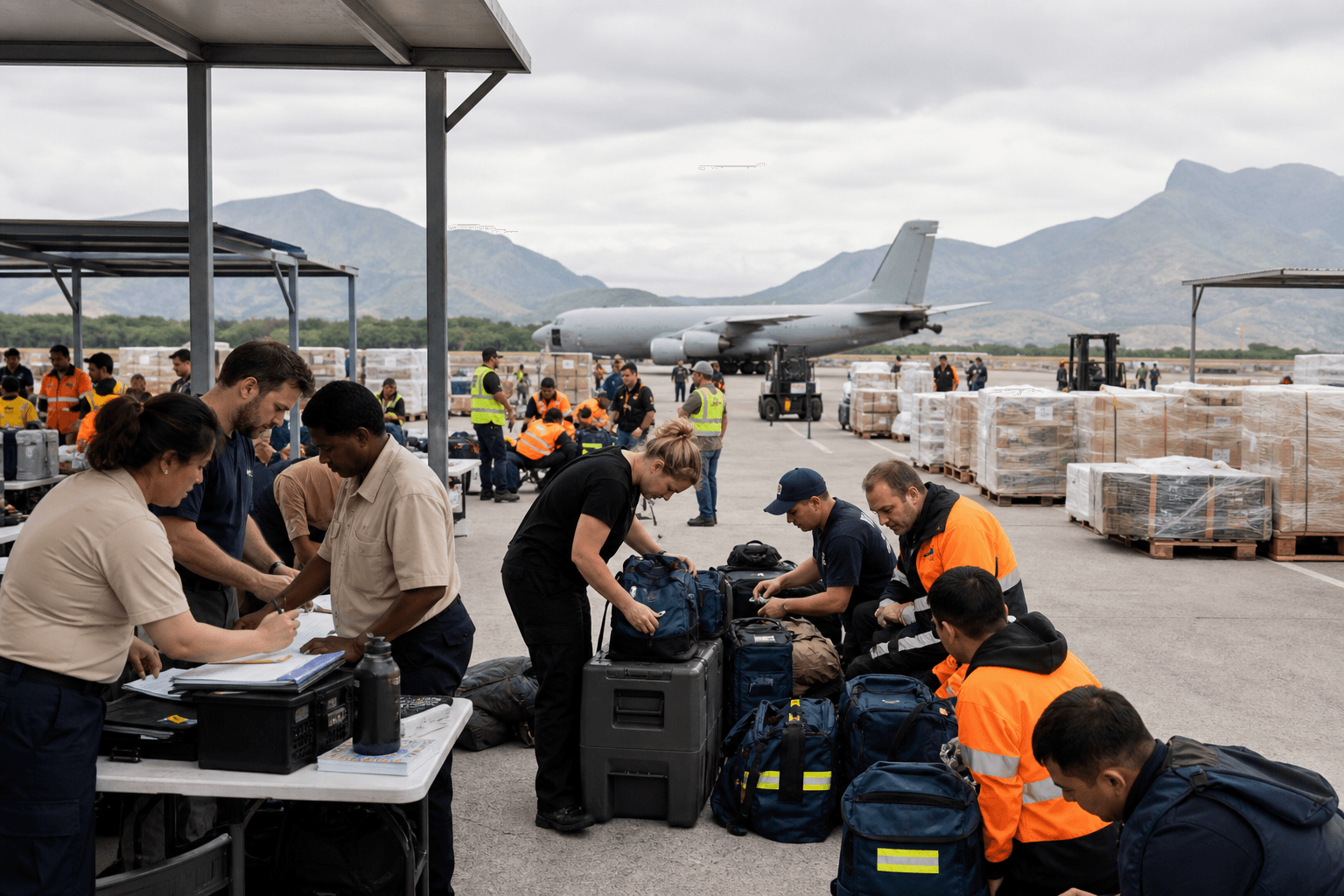
A reception point at an airport, port, or land crossing records who has arrived, what equipment they carry, how long they can operate, and what logistical support they need.
This process also helps national authorities manage customs, immigration, dangerous goods, rescue dogs, communications equipment, and onward movement. A self-sufficient team that brings shelter, food, water, fuel planning, and medical support places less pressure on the affected community.
Teams then connect with an on-site coordination structure. For urban search and rescue, a coordination cell can assign sectors and worksites, collect assessment results, track team capacity, and connect international specialists with the local emergency management authority. Shared methods make it easier for teams from different countries to understand assignments and report progress consistently.
Registration is not bureaucracy for its own sake. It prevents scarce transport from being assigned twice, allows dangerous sites to be prioritized, and gives authorities a reliable view of the resources available.
Search and Rescue Must Be Divided by Place and Priority
Collapsed buildings create a time-sensitive but complex search problem. Responders must consider likely occupancy, signs of survivable spaces, structural stability, access, fire, hazardous materials, aftershocks, and the equipment needed for safe entry.
Coordination teams divide a large affected area into manageable sectors. Individual worksites are assessed and assigned according to urgency and team capability. A light team may conduct rapid searches and gather information, while a heavy team can bring specialized tools, structural expertise, lifting capacity, and extended operations for difficult collapses.
Consistent worksite records are essential. Teams need to know what has been searched, what hazards were found, whether victims may remain, and why work stopped or moved elsewhere. Marking and reporting systems reduce the risk that one site is repeatedly assessed while another is missed.
Shared Information Prevents a Second Layer of Confusion
Every response organization produces information: damage observations, hospital capacity, road access, shelter numbers, weather forecasts, supply levels, and community requests. The challenge is turning those fragments into a useful operating picture.
Maps and situation reports should show what is known, what remains uncertain, and when information was last checked. A precise-looking map built from old reports can be more dangerous than an honest gap. Field teams need a simple way to submit updates, while decision makers need analysts who can compare reports and identify contradictions.
Communications also require redundancy. Mobile networks may be overloaded, towers may lack power, and fiber routes may be damaged. Satellite links and radio can help, but they still depend on trained operators, power, compatible equipment, and agreed channels. Wider lessons about undersea cable resilience apply here: having several connections offers limited protection if they share one vulnerable route or facility.
Medical Teams Support the Existing Health System
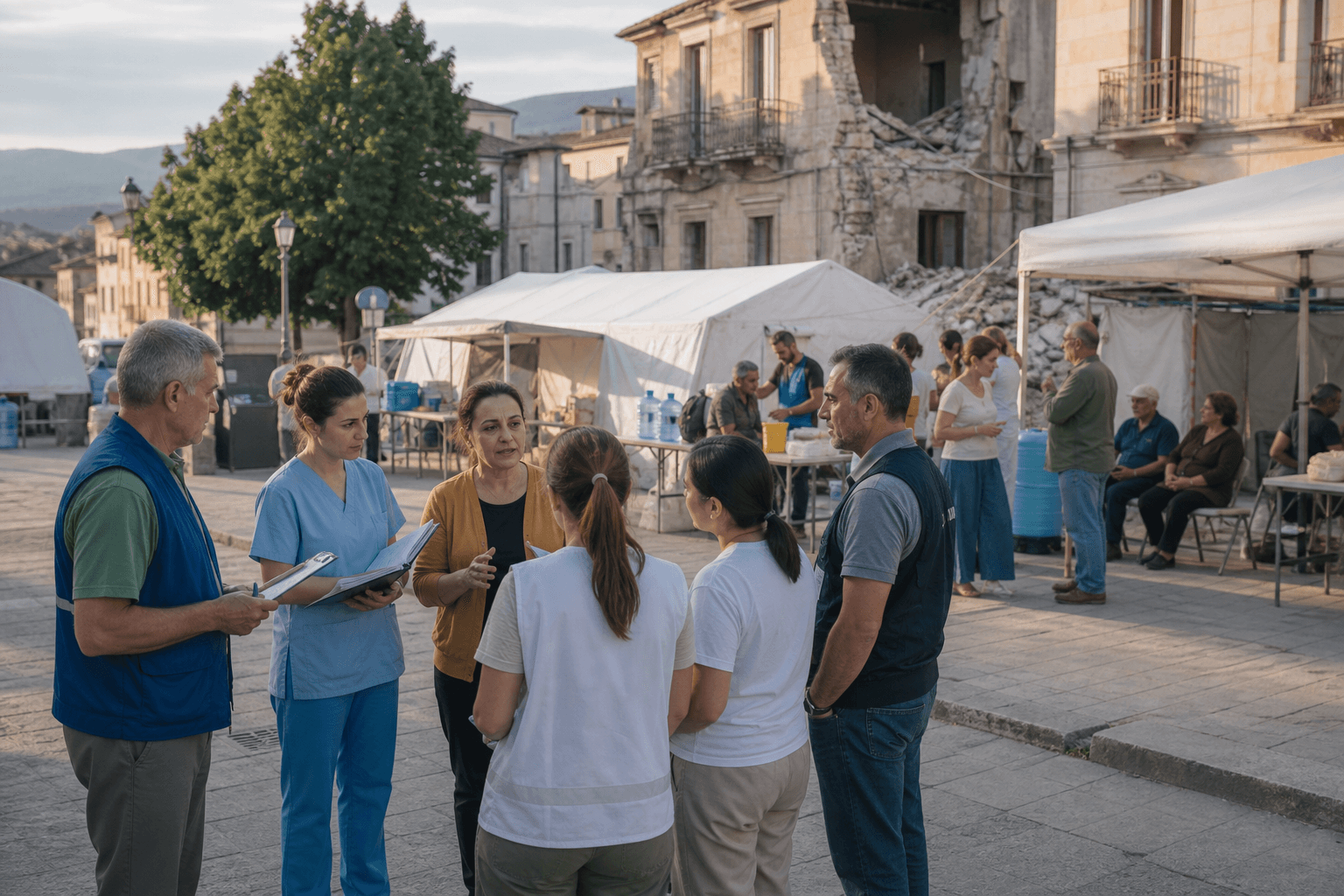
Earthquakes can create trauma injuries while simultaneously damaging clinics, interrupting power and water, displacing patients, and preventing staff from reaching work. International emergency medical teams are most useful when they are matched to a documented gap in the national health system.
Some teams provide mobile or fixed outpatient care. Others bring inpatient surgical capability, rehabilitation, specialist care, or support for damaged hospitals. They register with the health coordination system, follow national clinical requirements, report their capacity, and establish referral routes rather than operating as isolated field hospitals.
Continuity of ordinary care matters alongside earthquake injuries. People still need maternity services, medication for chronic conditions, dialysis, infection control, mental health support, and accessible care for disabilities. A response focused only on visible trauma can miss serious needs that grow as displacement continues.
Medical facilities also depend on logistics. Sterile supplies, oxygen, medicines, cold storage, safe water, waste management, fuel, and patient transport must all work together. A tent and a team do not become a functioning clinic until those systems are in place.
Relief Quickly Expands Beyond Rescue
Urban search and rescue receives intense attention in the first phase, but affected communities may need support for much longer. Families can lose homes, documents, income, water, sanitation, electricity, schools, and access to markets in a single event.
Shelter planning must account for weather, privacy, accessibility, fire safety, sanitation, family unity, and proximity to livelihoods. Water systems need testing as well as repair because damaged pipes can allow contamination. Relief distributions need reliable registration and feedback so assistance reaches isolated neighborhoods and people who face barriers to access.
Local organizations are crucial. Municipal workers, neighborhood groups, health staff, businesses, and community leaders understand routes, languages, social networks, and vulnerable households. International teams bring additional capacity, but they should not push aside the institutions that will remain after foreign responders leave.
Participation improves decisions. Residents can identify unsafe distribution sites, overlooked settlements, protection concerns, and practical ways to restore services. Listening is not separate from operational efficiency; it helps prevent well-intended aid from solving the wrong problem.
Logistics Determines Whether Assistance Moves
Relief supplies have little value while sitting at an airport. They must be unloaded, recorded, stored, prioritized, transported, and delivered despite damaged roads, limited fuel, congestion, and changing security or weather conditions.
Authorities may reserve airport slots for high-priority teams and equipment, establish staging areas outside congested terminals, and route lower-priority cargo through other entry points. Supply plans must include forklifts, trucks, drivers, warehouse space, spare parts, and the final journey from a regional hub to the community.
International transport networks can introduce further delays. Closed ports, disrupted canals, or longer shipping routes affect how quickly replacement equipment and reconstruction materials arrive. The concentration risks described in global shipping chokepoints therefore matter to disaster planners as well as commercial supply chains.
Unrequested donations can make congestion worse. Mixed clothing, expired products, unfamiliar medical equipment, or items without handling information consume storage and staff time. Cash support and requested, standardized supplies are often easier to direct toward changing needs.
Recovery Planning Begins During the Emergency
Engineers assess which structures can be occupied, repaired, or must remain closed. Utility operators prioritize essential services and isolate unsafe sections. Governments document damage, financing needs, land issues, and procurement requirements while immediate relief continues.
Restoring electricity illustrates the need for layers of resilience. Local generation, transmission, fuel supply, substations, and cross-border connections may all affect recovery. As with regional electricity grids, outside support is strongest when it adds options without replacing essential domestic capability.
International teams also need an orderly departure. They hand over records, equipment, patient information, and unfinished tasks to national services or longer-term partners. A mission is not complete merely because a team leaves the disaster zone.
Coordination Turns Many Offers Into One Response
Effective international earthquake relief rests on a few consistent principles: the affected country leads, assistance responds to assessed needs, incoming teams register and accept assignments, information is shared, local capacity is strengthened, and the transition to recovery is planned early.
No coordination system can remove the destruction caused by a major earthquake. It can prevent responders from adding avoidable delay and competition to an already difficult situation. The goal is not to make every organization identical. It is to give different teams a common direction so that specialist skills, supplies, and public generosity reach the places where they can do the most good.