
How International Sanctions Work
Sanctions can restrict money, trade, travel, and technology without using military force. Here is how they are designed, enforced, evaded, and eventually lifted.
Pressure Without Armed Force
International sanctions are legal restrictions intended to change behavior, limit access to resources, or signal that a government, organization, company, or individual has crossed a political or legal boundary. They sit between words and military action: more forceful than a diplomatic protest, but designed to avoid the direct use of armed force.
The word sanctions can describe very different measures. One program may freeze the assets of a small group of officials. Another may restrict weapons, banking, energy, transport, or advanced technology across an entire sector. Some sanctions are imposed by the United Nations Security Council and implemented by member states. Others are adopted by individual governments or regional organizations under their own laws.
That variety explains why simple claims that sanctions either "work" or "do not work" are rarely useful. The result depends on the goal, the measures chosen, the number of countries participating, the quality of enforcement, and the target's ability to adapt.
Who Decides to Impose Sanctions?
A sanctions program begins with a legal decision. At the United Nations, the Security Council can adopt measures that member states are required to implement. A sanctions committee may oversee the program, maintain a list of designated people and entities, consider exemptions, and receive reports about implementation or violations.
Governments and regional bodies can also impose their own sanctions. These measures bind people, companies, financial institutions, ships, aircraft, and transactions within the jurisdiction defined by the relevant law. Several countries may coordinate their programs, but the wording, deadlines, exemptions, and enforcement powers can still differ.
Sanctions normally form one part of a wider policy. Negotiations, security assistance, legal proceedings, export controls, and public pressure may continue at the same time. This is why sanctions are best understood as a tool of international diplomacy, not a complete foreign policy by themselves.
Different Measures Create Different Pressure
Sanctions are selected according to the behavior and resources that policymakers want to influence.
- Asset freezes prevent funds or economic resources belonging to designated people or entities from being moved, used, or made available. A freeze usually blocks an asset; it does not automatically transfer ownership to the government enforcing the restriction.
- Travel bans prevent listed individuals from entering or passing through participating countries, subject to any exemptions in the program.
- Arms embargoes restrict the sale, supply, transfer, maintenance, or financing of weapons and related equipment.
- Trade restrictions prohibit or license particular imports and exports. They may cover commodities, luxury goods, industrial equipment, or products that could have both civilian and military uses.
- Financial restrictions limit access to banking, investment, loans, securities, insurance, or other financial services.
- Sectoral measures restrict particular activities involving an industry without necessarily freezing every asset of every company in that sector.
These tools are not interchangeable. A travel ban may isolate senior officials but do little to reduce industrial capacity. An export restriction may slow access to specialized equipment while leaving ordinary consumer trade largely untouched. Broader trade restrictions and tariffs can affect similar commercial channels, but sanctions are usually tied to a foreign-policy or security objective rather than ordinary market protection.
How a Legal Decision Reaches a Transaction

A resolution, regulation, or executive decision does not enforce itself. Governments must publish rules, identify the people and activities covered, provide guidance, and assign agencies to administer licenses and investigate suspected breaches.
Financial institutions then screen customers, beneficial owners, payment messages, and counterparties against sanctions lists. A similar name is not enough to establish a match, so staff may need to compare dates of birth, addresses, ownership records, or other identifiers. Institutions also examine whether an unlisted company is owned or controlled by a designated person under the applicable rules.
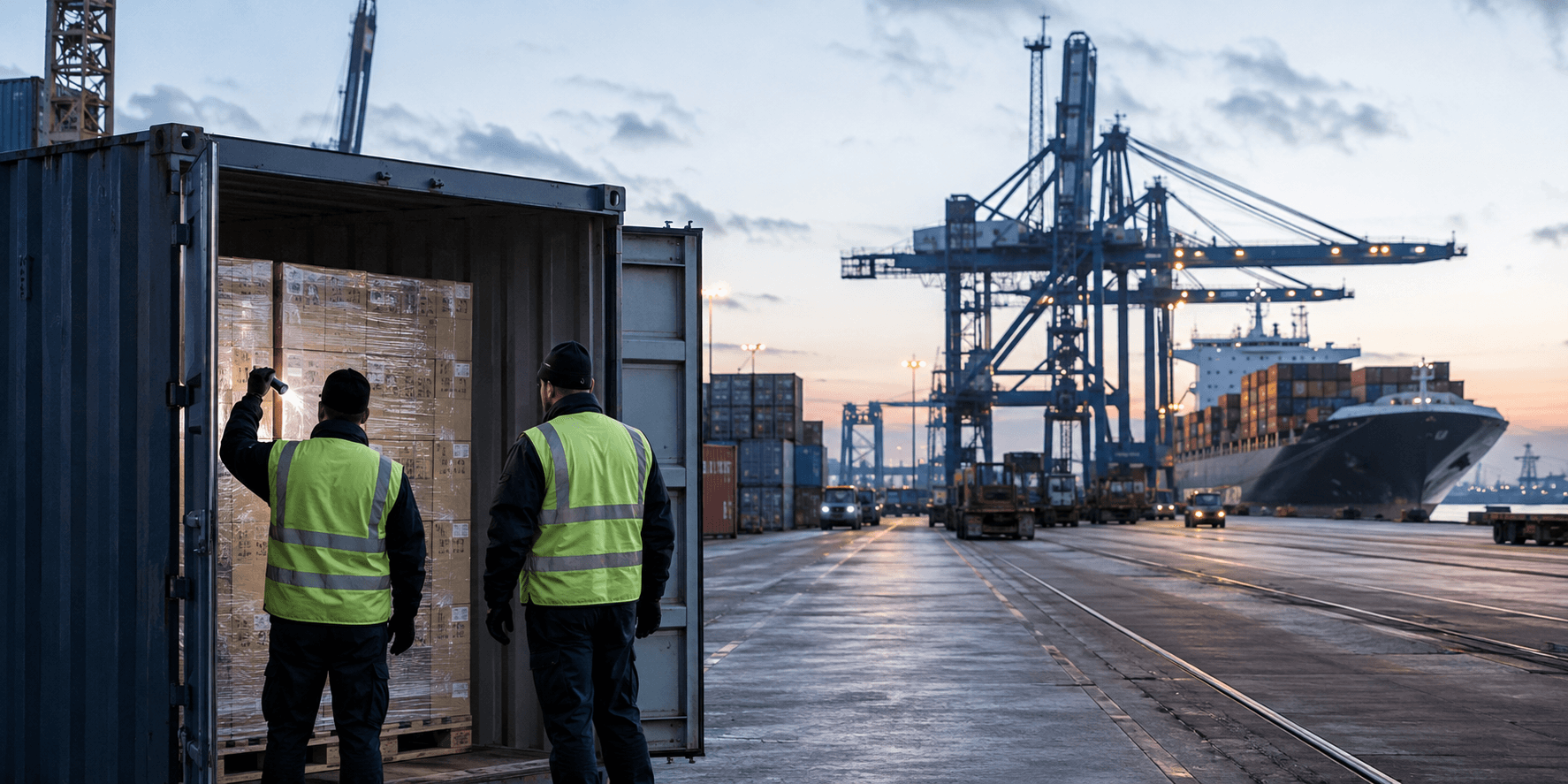
Customs agencies and exporters check goods, buyers, destinations, shipping documents, and end uses. Sensitive products may require a license even when the immediate customer is not listed. Freight companies, ports, insurers, brokers, and payment providers each control another point in the chain.
This distributed system is one reason enforcement can be uneven. A transaction may cross several jurisdictions with different rules and capabilities. Goods can change vessels, companies, or declared destinations. Disruption at a port or along major shipping routes and chokepoints can also complicate the difference between an ordinary delay and an intentional attempt to evade controls.
Targeted Sanctions Aim to Narrow the Impact
Earlier sanctions programs sometimes relied on broad restrictions across much of a country's economy. Modern programs often try to focus pressure on responsible leaders, armed groups, procurement networks, state enterprises, or specific sources of revenue.
Targeting can reduce harm to the wider population, but it does not eliminate spillover. Banks and suppliers may avoid lawful activity when the legal position is difficult to assess or the penalties for a mistake are severe. This is known as overcompliance or de-risking. A permitted payment can still fail if every institution in the chain is unwilling to process it.
Precision therefore depends on more than a short list of names. Authorities need clear definitions, reliable identifying information, workable licensing processes, prompt answers to difficult cases, and channels for correcting errors. Designated parties also need a process for requesting review or removal when the program provides one.
Humanitarian Exemptions Need Practical Routes

Sanctions programs can include exemptions or licenses for food, medicine, humanitarian assistance, diplomatic activity, and other protected needs. An exemption places an activity outside a prohibition when its conditions are met. A license gives permission for activity that would otherwise be restricted. The exact distinction depends on the governing rules.
Writing humanitarian protection into the law is essential, but delivery still requires functioning banks, suppliers, insurers, transport, and local partners. Each participant must be confident that the payment, goods, destination, and recipient are permitted. Vague rules or slow approvals can delay assistance even when no authority intended to block it.
Good design anticipates these operational steps. It uses clear language, broad enough protection for legitimate aid, and practical guidance for financial and logistics providers. Those safeguards matter because international humanitarian response already depends on coordinating many organizations under pressure.
Why Sanctions Are Difficult to Enforce
Targets adapt. They may use front companies, intermediaries, informal payment channels, concealed ownership, false documents, transshipment points, or substitute suppliers. A restricted item can contain components made in several countries and pass through multiple distributors before reaching its final user.
Enforcement agencies therefore look beyond individual shipments. They examine recurring addresses, shared directors, unusual trading patterns, sudden changes in routes, and companies with little credible commercial history. Cooperation between customs, financial intelligence units, regulators, police, prosecutors, and international partners can reveal connections that no single agency sees.
Private companies also need proportionate controls. A small domestic retailer and a multinational bank do not face the same exposure. Effective compliance begins by understanding customers, products, ownership, destinations, and payment routes, then applying more scrutiny where the risk is higher.
No system can guarantee that every prohibited transaction will be stopped. The practical objective is to raise the cost and difficulty of obtaining restricted money, goods, or services while detecting and penalizing serious breaches.
Measuring Results Requires a Clear Goal
Sanctions can pursue several objectives: changing a policy, constraining military or technological capacity, disrupting financing, supporting negotiations, or expressing collective condemnation. A program might fail to produce a public reversal yet still slow procurement or increase the cost of prohibited activity.
Assessment should begin with the stated goal. Useful questions include:
- Is the requested behavior specific enough for the target to understand?
- Are the restrictions connected to resources the target actually needs?
- How many important trading and financial centers participate?
- Can the target find substitutes, alternative routes, or outside support?
- Are unintended humanitarian and economic effects being monitored?
- Is there a credible route to easing or lifting measures if conditions are met?
Timing matters as well. Financial restrictions can take effect quickly, while export controls may influence capacity only when inventories, spare parts, or maintenance options run short. Political effects can be slower and harder to separate from conflict, domestic policy, commodity prices, or wider changes in the global economy.
Sanctions Need Both Enforcement and an Exit
Sanctions are most coherent when policymakers define the objective, match measures to it, coordinate enforcement, protect legitimate humanitarian activity, and explain what would lead to review or removal. Without those elements, restrictions can become permanent pressure without a clear theory of change.
Strong enforcement and a credible exit are not opposites. Enforcement makes the restriction meaningful. A clear off-ramp gives the target a reason to alter its behavior and allows participating countries to judge progress against something more precise than political mood.
Sanctions cannot guarantee diplomacy will succeed, and they cannot prevent every prohibited transaction. They can, however, limit access to important resources, isolate decision-makers, and create leverage without immediate military force. Their real effectiveness lies not in the length of a prohibited list, but in whether law, implementation, humanitarian safeguards, international cooperation, and political strategy support the same achievable goal.