
How Seed Banks Protect Global Food Security
Seed banks preserve the crop diversity that agriculture may need tomorrow. Explore how collections stay alive, why backup vaults matter, and how stored seeds become useful to farmers.
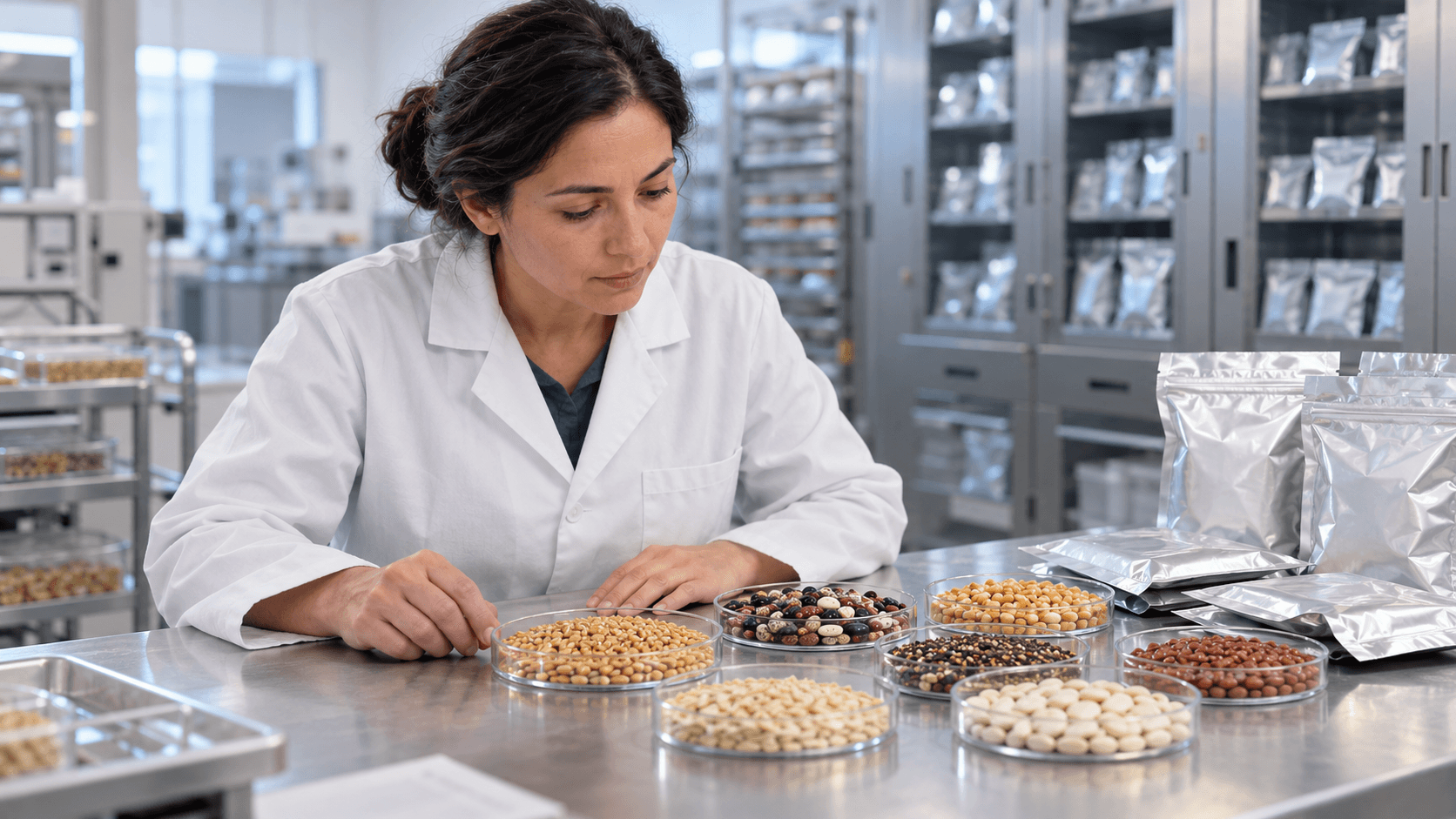
Preserving Options for Tomorrow's Harvest
A harvest supplies food for the coming months. A seed collection can preserve possibilities for crops that people will grow decades from now. Both contribute to food security, but they work on different timescales.
Agricultural seed banks conserve living seeds and the genetic diversity they contain. They form part of a wider network of genebanks, which also maintain crops through living plants, tissue cultures, and other methods. Their purpose includes keeping material available for research, breeding, and future use.
The Crop Trust describes crop diversity as the raw material for adapting agriculture to changing conditions. Differences among plants can offer starting points for improving resistance to disease, tolerance of environmental stress, or food quality. Conserving that diversity keeps choices open before anyone knows which traits will become essential.
This is a different task from holding grain for emergency consumption. A conservation collection is valuable because of what its samples represent, rather than the number of meals they could immediately provide.
A Collection Is More Than a List of Species
Saying that a bank stores wheat or beans tells only part of the story. Diversity exists within a crop as well as between crops. Collections may include farmers' varieties, breeding material, and related wild plants.
A separately identified sample is called an accession. FAO's genebank standards define it as material representing a cultivar, breeding line, or population, maintained for conservation and use. An accession count therefore does not mean the same thing as a species count or a count of newly developed commercial varieties.
That distinction matters when a news announcement celebrates a large deposit. Ask what was added, which gaps it fills, and whether similar material is already conserved elsewhere. More packets can strengthen a collection, but the number alone cannot describe its coverage or usefulness.
Drying and Cooling Slow the Clock
Many important crops produce seeds that tolerate drying and low temperatures. These are known as orthodox seeds. Preparing them for storage requires conditions appropriate to the material, rather than simply putting a fresh harvest into a freezer.
NordGen's account of its seed laboratory describes a sequence of cleaning, drying, packaging, registration, and freezer storage. It uses laminated packaging to protect prepared samples. FAO's standards likewise treat preparation and storage as connected conservation tasks.
Each stage needs a reliable connection to the sample's identity. A carefully preserved packet loses much of its value if staff cannot establish what it contains or where it belongs in the collection.
The comparison with food cold chains is useful: equipment works within a system of handling, records, maintenance, and people. For a seed bank, success means retaining living, identifiable material that can still be used in the future.
Stored Seeds Still Need Attention
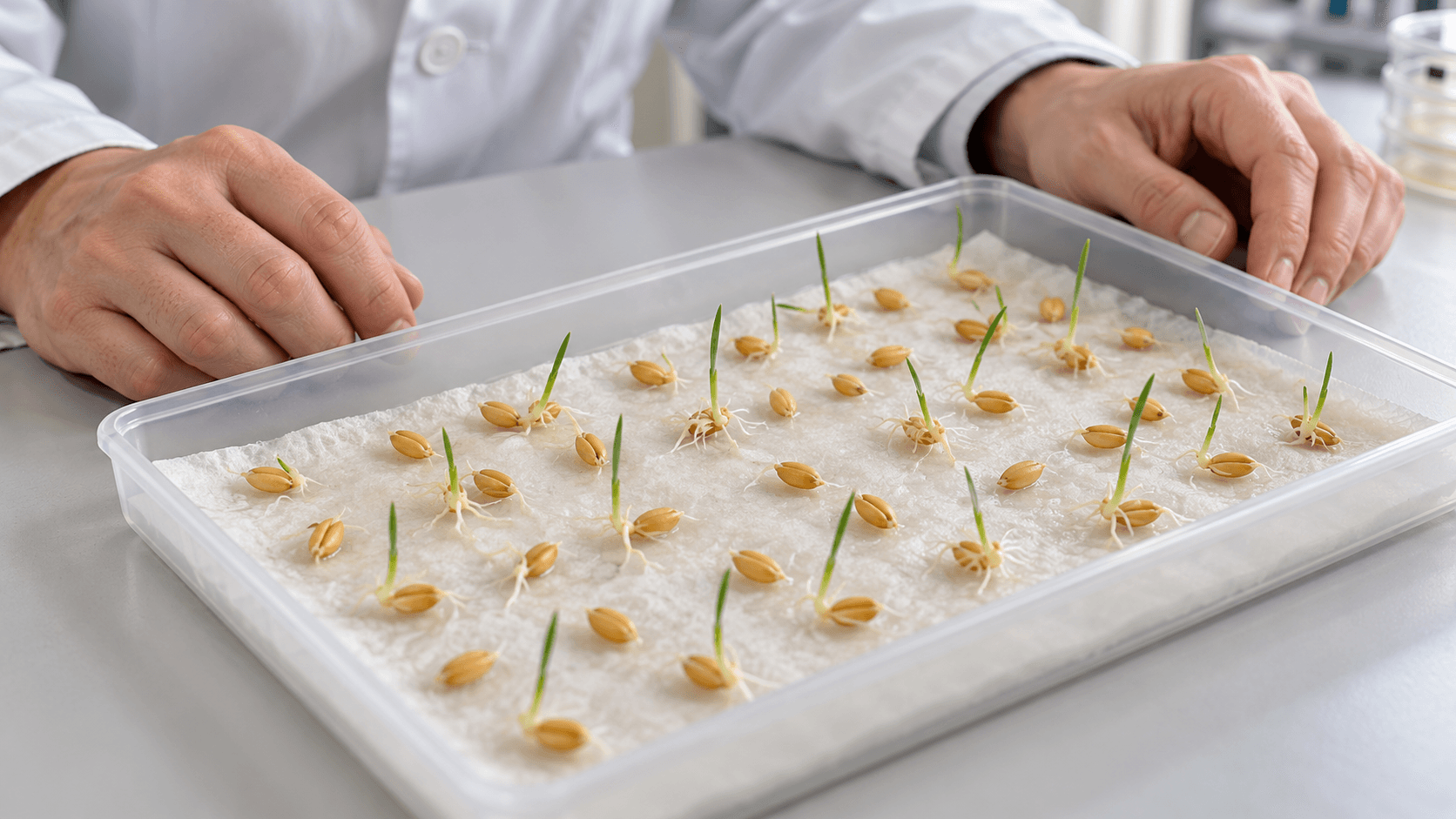
Low temperatures do not turn seeds into permanent objects. Their ability to germinate must be checked. NordGen explains that its laboratory regularly tests samples and that different species need different germination conditions.
When viability falls, or supplies become depleted through distribution, staff may need to grow plants and harvest fresh seeds. This renewal is called regeneration. NordGen's greenhouse and field operations show why it requires continuing horticultural expertise, land, and work across growing seasons.
Regeneration also needs care to preserve the sample's genetic identity. FAO's standards address avoiding mixtures and unintended pollination between accessions. Producing a new bag of seeds is insufficient if the process changes the diversity the bank was meant to conserve.
For readers assessing a collection, the practical question is not simply whether the freezer is full. It is whether testing and renewal are keeping pace with the collection's needs. A growing backlog can be less visible than a broken machine while still deserving attention.
Why Svalbard Is a Backup
The Svalbard Global Seed Vault in Norway stores duplicates from other genebanks. NordGen describes it as a safety service that can help institutions recover if their own material is lost.
Seeds remain owned by the depositor, which controls withdrawal of its material. This arrangement is often called storage under black-box conditions. The vault serves a different function from the working collections that supply material to breeders and researchers.
NordGen also explains that depositing banks monitor their own collections and can determine when replacement seeds should be sent. A deposit therefore remains connected to continuing work elsewhere.
This is why a dramatic vault entrance should not dominate the whole story. A backup helps preserve recovery options, while functioning genebanks keep collections documented, tested, and available. Funding one part of that relationship cannot remove the need to support the others.
Not Every Crop Fits in a Seed Packet
Some seeds cannot survive the drying conditions used for conventional long-term seed storage. Other crop varieties are maintained through vegetative propagation, where preserving a particular plant requires a different approach.
The Crop Trust's account of banana conservation describes field collections, plants maintained in sterile culture, and cryopreservation. In cryopreservation, carefully prepared plant material is held at extremely low temperatures. These methods require their own facilities, procedures, and expertise.
Consequently, a country can have an impressive seed store while still needing conservation capacity for other crops. Evaluating agricultural diversity requires asking what forms of material are protected and which remain vulnerable.
From Conserved Diversity to a Useful Crop
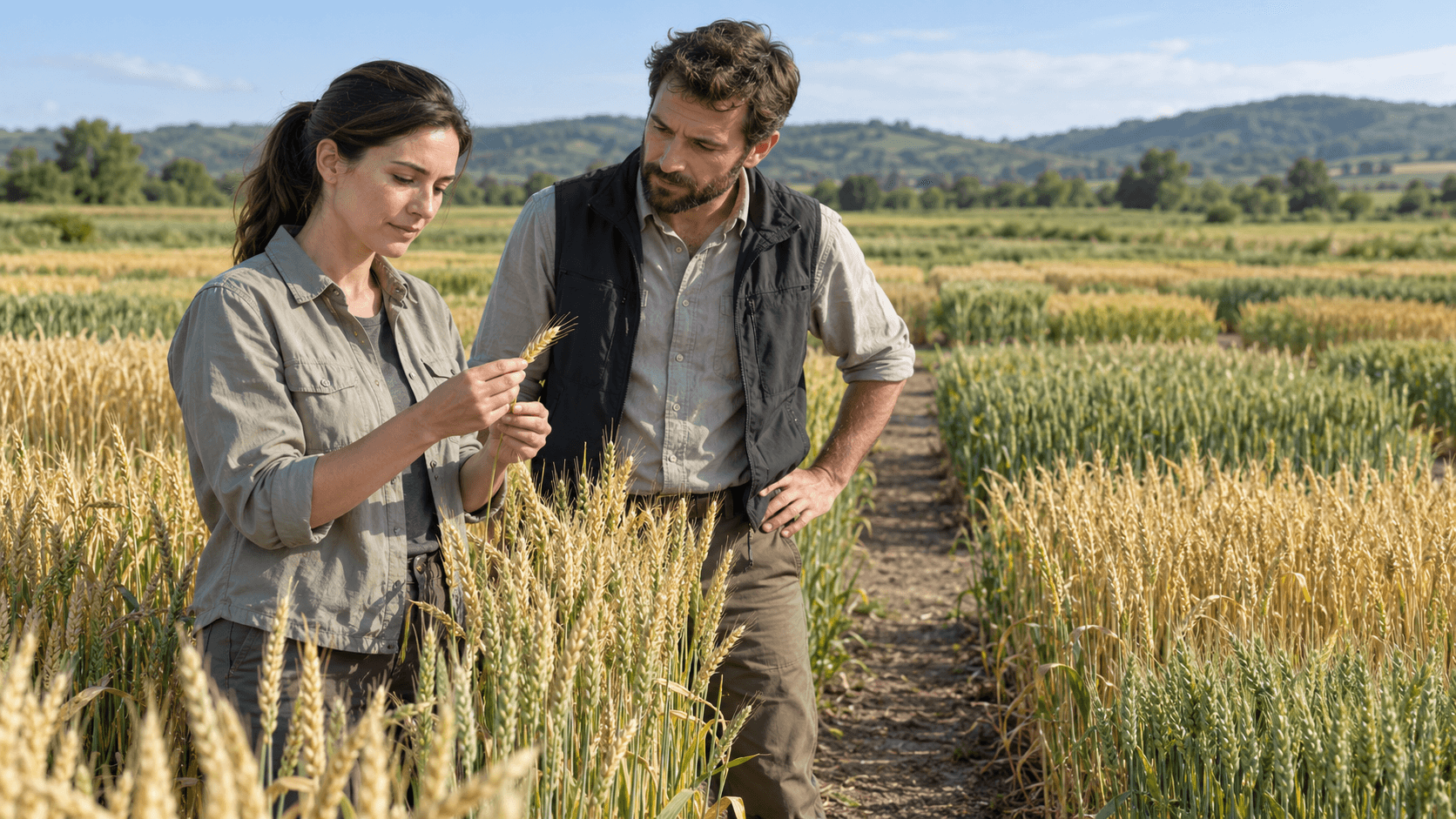
Keeping material alive is the beginning of a potential agricultural benefit. Researchers still need to identify promising accessions, investigate their traits, and work out how those traits might be useful.
The Crop Trust's explanation of crop wild relatives highlights their potential contribution to disease resistance and tolerance of drought or heat. It also stresses the challenges of using them. Conserved diversity offers possibilities, not an automatic guarantee of a better variety.
Good information helps researchers choose where to begin. Genesys, the genebank information platform, distinguishes basic accession records from additional trait data. Evaluation data can describe performance under particular conditions; it should be read with those conditions in mind.
Consider a hypothetical breeder looking for material suited to drier seasons. A sample's place of origin might suggest a research question, but it does not prove performance on another farm. Testing must examine the relevant growing conditions and practical needs before any claim of suitability is justified.
Water availability remains part of that wider setting. The institutions and infrastructure discussed in cooperation over shared rivers influence agriculture alongside the characteristics of the plants themselves.
International Access Needs Working Rules
An accession is more useful when researchers can discover it and understand the conditions for requesting it. Genesys explains that requests go to holding genebanks and remain subject to their distribution policies and applicable rules.
For material within the International Plant Treaty's Multilateral System, a Standard Material Transfer Agreement sets the terms of transfer. FAO describes it as the contract used to implement the system's provisions, including benefit-sharing. It should not be assumed that every seed collection or every exchange follows an identical arrangement.
For a conservation partnership, useful questions include who holds the material, how requests are handled, and what information accompanies a transfer. Clear responsibilities make international cooperation more practical than a broad promise that seeds will be shared someday.
Judge the Continuing Service, Not Just the Opening Ceremony
A new building or major deposit is easy to announce. Conservation also needs money for ordinary operations year after year. The Crop Trust's endowment model explicitly supports long-term genebank funding, reflecting that continuing obligation.
When evaluating a seed-bank project, ask:
- What diversity is covered? Distinguish species, accessions, duplicates, and important gaps.
- Is the material still usable? Look for testing, regeneration, accurate records, and suitable storage methods.
- Can the collection recover from a loss? Examine where duplicates are held and who maintains them.
- Can people use it? Check discoverability, request procedures, and links with research and breeding.
- Who funds the routine work? Ask about staff, maintenance, and operations after the launch funding ends.
Seed banks preserve one essential resource within a much larger food system. Farmers still need workable growing conditions, markets, and distribution, while households need access to affordable food. As our guide to global food prices and grocery bills explains, those connections have their own pressures and delays.
The enduring contribution of a well-run collection is to keep agricultural choices available. That value depends on the quiet work between deposits: checking, renewing, documenting, and making conserved diversity useful.
Images are AI-generated conceptual illustrations, not photographs of a specific facility, field trial, or research team.