
How Wastewater Surveillance Tracks Disease Across Communities
Sewage can reveal disease signals before every infection appears in clinical reports. Learn how wastewater monitoring works, what its results mean, and why public-health action needs more than a sample.
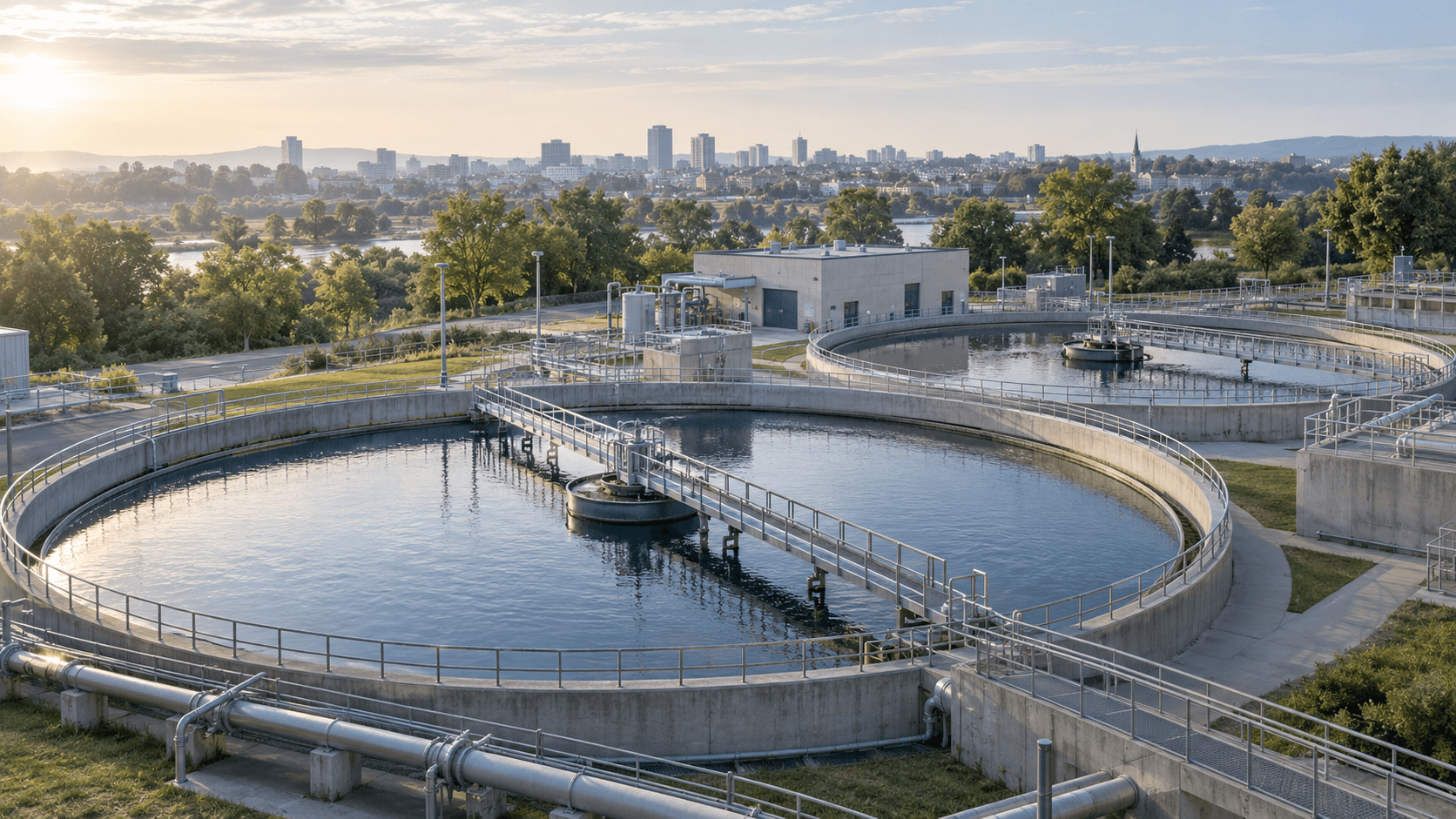
A Community Signal Beneath the Streets
A public-health report usually starts with people: someone seeks care, receives a test, or enters a hospital. Wastewater surveillance follows a different route. It examines material moving through sewage systems to learn about infections in the population contributing to those systems.
For some pathogens, infected people shed detectable material that reaches wastewater. Collecting and testing samples can reveal a community signal even when those people have no symptoms or do not seek medical care. The result adds another view of disease activity alongside clinical information.
This is not an individual diagnosis or a census of everyone who is ill. It is a way to ask focused questions about a defined area: Is a particular pathogen detectable? Is its signal changing? Does that change warrant closer investigation?
Understanding those boundaries makes wastewater monitoring more useful to readers of international health news. A positive sample, a rising trend, and an outbreak confirmed through clinical investigation are related pieces of evidence, but they are not interchangeable.
The Sampling Area Matters
The population represented by a sample depends on where it is collected. A sewershed is the area served by a wastewater collection system. It may include several neighborhoods and may not follow municipal or health-district boundaries.
Untreated wastewater entering a treatment plant is a common sampling point. More targeted sampling can take place upstream, but a smaller collection area requires its own assessment of which buildings and people contribute. The location should follow the public-health question rather than simply being the easiest place to reach.
Wastewater operators are essential partners. They understand the pipes, incoming flows, industrial inputs, and operational changes that help explain a sample. Public-health teams need that context alongside laboratory results.
For a reader, the first useful question is therefore geographic: Which population does this result actually represent? A dot on a national map does not necessarily describe everyone living nearby.
From a Sample to a Laboratory Result
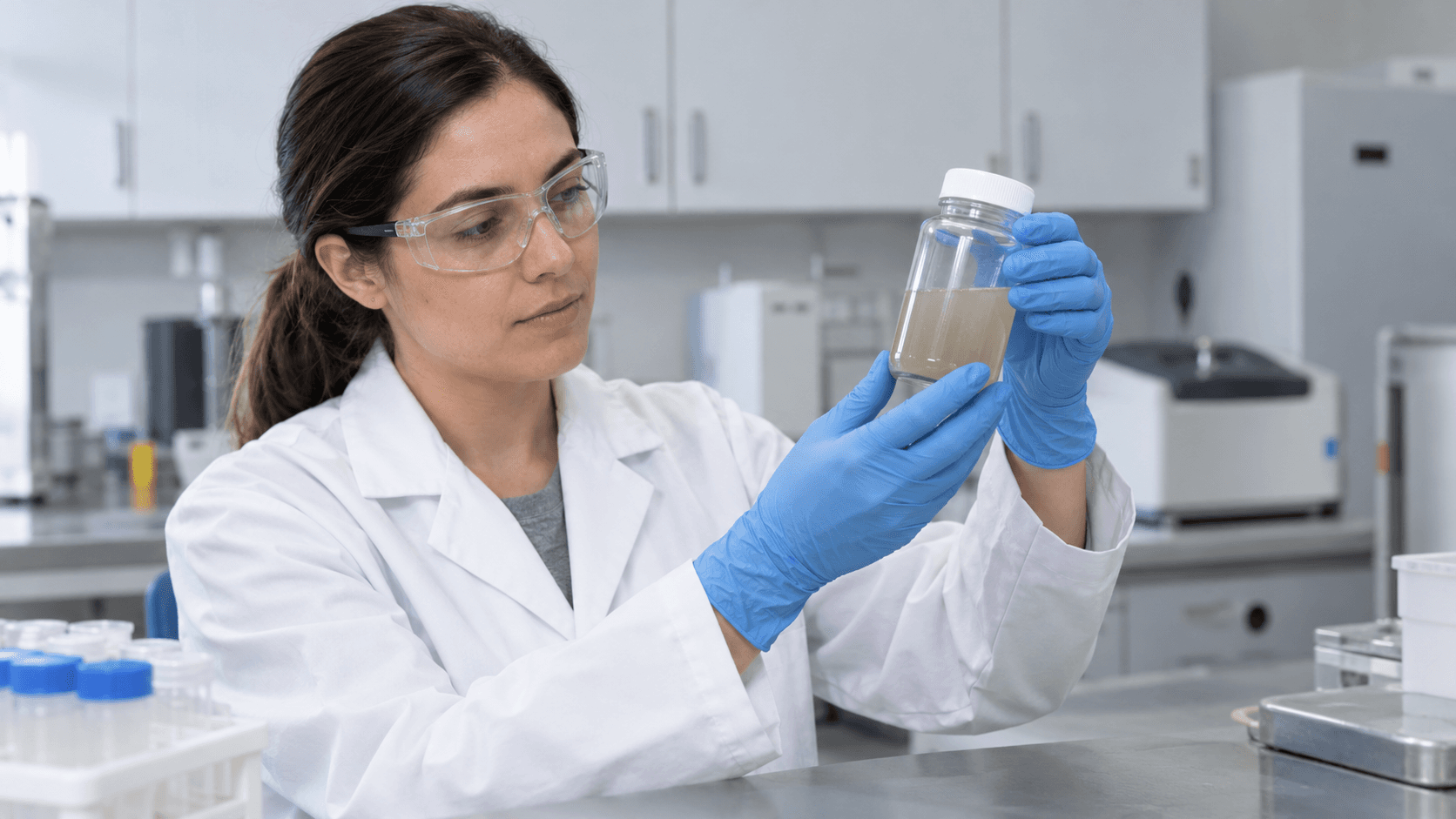
Samples must be collected, transported, processed, and analyzed using methods suitable for the target. Collection may capture a moment or combine material gathered over time. Consistent timing and repeated collection make it easier to distinguish a developing pattern from an isolated observation.
Laboratories can use different approaches. PCR-based tests look for specific genetic sequences; other methods can isolate organisms or examine genetic material more broadly. A test designed for one target does not establish whether every other pathogen is present.
The World Health Organization describes wastewater monitoring as complementary surveillance. For SARS-CoV-2, its guidance identifies uses including tracking circulation, detecting changes in trends, and obtaining information about variants. Each use needs an appropriate collection and analysis plan.
This explains why announcing a new testing machine is only part of establishing a service. The reporting timetable, sample handling, and interpretation must also work.
Detection Is Not a Case Count
Finding a target means the laboratory detected it in the material tested. Failing to find it can mean it was absent from that sample or below the test's ability to detect it. Neither result identifies who contributed it.
The amount measured also does not translate directly into a number of sick people. Shedding differs between individuals and over the course of infection. For COVID-19, genetic fragments can be detected after the period when a person is infectious. NSW Health's explanation of sewage surveillance makes this distinction explicit.
Wastewater concentration has other influences. Rain can dilute sewage in systems receiving additional water. Collection timing, chemicals, and microorganisms can affect measurement. A sudden numerical change therefore needs context before it is described as a sudden change in illness.
Imagine a hypothetical town with one unexpectedly high result. That finding is a reason to check the sample, the sewer conditions, and subsequent observations. By itself, it cannot establish how many residents became infected that day.
Trends Need Consistent Context
A sequence of observations can be more informative than a single result. Analysts assess whether a signal is increasing, decreasing, or remaining broadly stable, taking account of sampling frequency and the methods used.
Comparing two places requires additional care. Catchment populations, wastewater volumes, laboratory methods, and reporting practices may differ. Adjusting results for relevant factors can improve comparison, but readers still need to understand what an indicator measures.
For example, a locally defined activity category may describe a site's position relative to its own history. It should not automatically be read as a count of cases or a universal scale shared by every country's dashboard.
When reading a trend, check the collection dates as well as the publication date. A newly published report can describe older samples. Missing observations and method changes should be explained rather than silently joined into an apparently continuous story.
Sewer Coverage Sets a Boundary
Municipal monitoring can capture infections without relying on access to medical testing. That is a valuable complement where clinical reports miss people who cannot or do not seek care.
It still has a coverage limit. Communities using septic tanks or other sanitation arrangements may not contribute to the sampled sewer. The US Centers for Disease Control and Prevention notes that wastewater reporting often represents urban and suburban municipal systems more extensively than rural or non-sewered communities.
People also move. Visitors and commuters can contribute outside the place where they live. A catchment's signal describes its contributors, not a permanently fixed list of residents.
Coverage should be reassessed when infrastructure or population patterns change. After a disaster, assumptions about functioning pipes, transport, and laboratory access may no longer hold. The coordination described in our guide to international disaster relief after an earthquake helps explain why restoring those practical services matters alongside collecting health information.
Information Needs a Response Plan

A surveillance program should define who reviews results and what questions a concerning signal will trigger. Depending on the disease and local circumstances, officials may examine clinical data more closely, arrange additional investigation, prepare health services, or strengthen public communication.
The response should combine wastewater findings with other evidence. WHO guidance treats the system as an additional source of population-level information; it does not turn every detection into a complete explanation of local transmission.
The same connection between observation and action appears in how early warning systems turn forecasts into protection. Information creates useful time only when someone can interpret it, communicate it, and carry out a proportionate response.
A practical planning exercise is to trace one result through the whole process. Who receives it? Who checks its meaning? Who can authorize follow-up? How will the public hear about a material change? Unanswered questions identify gaps that more sampling alone will not resolve.
International Cooperation Requires Comparable Evidence
Diseases can cross borders, but wastewater data do not become comparable merely because neighboring countries publish them. Cooperation requires clear descriptions of the targets tested, populations covered, collection schedules, methods, and uncertainty.
The European Centre for Disease Prevention and Control's framework for integrating wastewater surveillance emphasizes public-health usefulness, laboratory support, and coordination with existing infectious-disease surveillance. The purpose is to improve decisions, not simply accumulate more measurements.
Useful cooperation can include shared quality assessments, technical training, and agreed reporting definitions. Countries can learn from one another while retaining sampling priorities that reflect their own health needs and infrastructure.
For readers, the distinction matters when an international headline ranks countries by wastewater activity. Before accepting the ranking, ask whether it compares equivalent indicators and sufficiently representative populations.
Public Trust Is Part of the Infrastructure
Community-level sampling does not remove every privacy or fairness concern. Publishing findings for a small, identifiable population can raise questions about stigma, access to data, and how the information might be used.
WHO's ethics framework addresses transparency, community engagement, proportionality, and stewardship of samples and data. A program needs a clear purpose and an explanation of its benefits and potential harms.
That creates practical questions for decision-makers: Who can access detailed results? How long are samples retained? How will findings be communicated without blaming a neighborhood? Do the communities being monitored receive useful information and support?
Trust depends on clear answers over time, particularly when a program expands from broad municipal monitoring to smaller settings.
Five Questions for the Next Announcement
When a government or laboratory announces expanded wastewater surveillance, look beyond the number of participating sites:
- What is the objective? Identify the pathogen and the decision the program is intended to support.
- Who is represented? Check sewer coverage, catchment boundaries, and important populations outside the sample.
- How dependable is the series? Look for a consistent collection schedule, timely reporting, and explanations of method changes.
- What happens after a signal? Ask how laboratory findings will be considered alongside clinical evidence and who handles follow-up.
- How are people protected? Examine communication, data access, community involvement, and safeguards against stigma.
Wastewater surveillance makes an often-overlooked public service part of disease intelligence. Its value comes from connecting a well-understood sample to a well-supported decision, with clear limits on what the evidence can say.
Images are AI-generated conceptual illustrations, not photographs of a specific facility, experiment, or meeting.